


Article-At-A-Glance
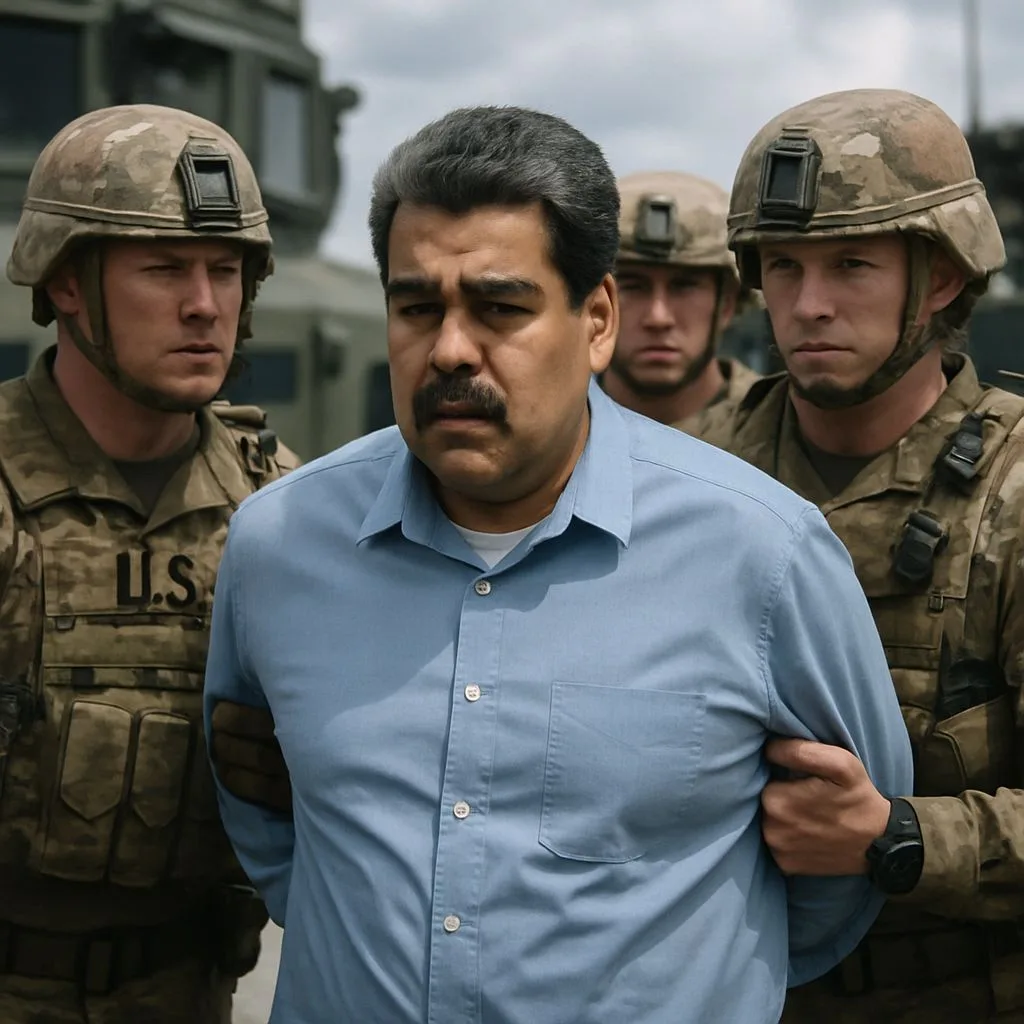
- The US military captured Venezuelan President Nicolas Maduro in an unprecedented operation that has sent shockwaves through international diplomatic channels
- Latin American nations have united in condemning the US action as a violation of Venezuelan sovereignty and international law
- The UN Secretary-General expressed being “deeply alarmed” by the US military strikes, citing potential violations of the UN Charter
- Global oil markets face potential volatility as Venezuela’s production capabilities remain uncertain following the military action
- The Trump administration has declared intentions to “run the country,” raising serious questions about Venezuela’s immediate political future
The United States military has captured Venezuelan President Nicolas Maduro in a shocking military operation that has upended international relations. President Donald Trump announced the capture following what he described as “large-scale strikes” against Venezuela, triggering immediate and varied responses from global leaders. This unprecedented action has created a diplomatic firestorm with potential long-term consequences for US relations throughout Latin America and beyond.
The military operation involved precision strikes targeting key facilities in Caracas, including the Generalissimo Francisco de Miranda Air Base, La Carlota airfield, and Fuerte Tiuna military facility. Reports indicate that US forces also secured control of Port La Guaira, Venezuela’s main conduit to the Caribbean Sea. The operation’s scope and execution suggest extensive planning by US military and intelligence agencies.
“The bombings on Venezuelan territory and the capture of its president cross an unacceptable line. These acts represent a grave affront to Venezuela’s sovereignty and yet another extremely dangerous precedent for the entire international community.” – Official statement from regional leaders
US Military Captures Venezuelan President Maduro
In a dramatic escalation of tensions, US forces have successfully captured Venezuelan President Nicolas Maduro and his wife, Cilia Flores. President Trump made the announcement hours after explosions were reported in Venezuela’s capital. General Dan Caine provided details of the operation, explaining how US forces executed the capture mission while simultaneously conducting strikes on strategic locations throughout Caracas. The operation appears to have been conducted with minimal US casualties reported.
Regional Powers Condemn “Violation of Sovereignty”
Latin American nations have responded with nearly unanimous condemnation of the US military action. Regional leaders have characterized the strikes and capture as direct violations of Venezuela’s sovereignty and territorial integrity. The swift and unified response underscores the deep concern about the precedent this action sets for international relations and regional stability.
Brazil’s Lula: “Unacceptable Line Crossed”
Brazilian President Luiz Inácio Lula da Silva issued one of the strongest condemnations, stating that “the bombings on Venezuelan territory and the capture of its president cross an unacceptable line.” He further emphasized that these actions “represent a grave affront to Venezuela’s sovereignty and yet another extremely dangerous precedent for the entire international community.” Brazil, as the largest economy in South America, has positioned itself as a key diplomatic voice opposing the US action.
Lula also called for an emergency meeting of regional bodies to address what he termed a “crisis of international law.” The Brazilian government has historically maintained complex relations with the Maduro regime, often critiquing its democratic deficits while opposing external intervention. This balanced position has now shifted toward unequivocal criticism of the US operation.
Brazil’s Foreign Ministry further issued a formal diplomatic protest, calling on the United States to “immediately release President Maduro and restore legitimate Venezuelan governance structures.” The statement represents a significant diplomatic challenge from one of America’s most important regional partners, as the US welcomes Maduro’s downfall.
Colombia’s Petro Decries “Aggression Against Latin America”
Colombian President Gustavo Petro, despite historically complex relations with neighboring Venezuela, condemned the US action in strong terms. “The Government of the Republic of Colombia views with deep concern the reports of explosions and unusual air activity in Venezuela, as well as the resulting escalation of tension in the region,” stated Colombia’s official response. Petro further characterized the action as “not merely an aggression against Venezuela, but against Latin American sovereignty as a concept.”
Nicaragua Demands Respect for Venezuelan Sovereignty
Nicaragua’s government issued a forceful denunciation, calling on the UN Security Council to “act immediately to halt the unlawful aggression” and hold responsible parties accountable. President Daniel Ortega, a longtime ally of the Maduro regime, described the US actions as “state terrorism” and pledged solidarity with the Venezuelan people. The Nicaraguan statement emphasized that the action constituted a “blatant violation of Venezuela’s national sovereignty and territorial integrity.” In related developments, the US welcomed Maduro’s downfall, urging adherence to international law.
Chile Calls for Peaceful Resolution
Chilean President Gabriel Boric has taken a more measured stance while still expressing concern over sovereignty violations. “While we have consistently advocated for democratic restoration in Venezuela, military intervention by foreign powers risks destabilizing the entire region,” Boric stated in an official address. His administration has called for an emergency meeting of the Organization of American States to develop a coordinated regional response that prioritizes Venezuelan civilian welfare and regional stability.
United Nations Response to US Military Action
The United Nations has responded with serious concern to the US military strikes and capture operation. Secretary-General Antonio Guterres issued a statement through his spokesperson expressing that he is “deeply alarmed by the recent escalation in Venezuela, culminating with today’s United States military action in the country, which has potential worrying implications for the region.” The statement reflects growing international anxiety about the precedent this action sets for international relations.
“Deeply Alarmed” by Precedent Set
The UN Secretary-General’s statement emphasized grave concerns about the potential normalization of unilateral military action against sovereign states. Guterres highlighted the dangerous precedent this action could establish for future international conflicts, noting that “such actions undermine the collective security architecture painstakingly built since the Second World War.” The statement carefully avoided direct condemnation while clearly signaling profound unease with the operation’s implications for global governance.
Concerns Over International Law Violations
UN legal experts have raised serious questions about potential violations of Article 2 of the UN Charter, which prohibits the use of force against territorial integrity or political independence of any state. “The UN Charter establishes clear parameters for the legitimate use of force in international relations,” stated the UN High Commissioner for Human Rights. “These parameters include self-defense and Security Council authorization, neither of which appears to have been invoked in this case.” This assessment significantly challenges the legal basis for the US operation.
Calls for Inclusive Dialogue
The United Nations has called for an immediate de-escalation and return to diplomatic channels. Secretary-General Guterres has offered UN mediation services to facilitate dialogue between all relevant parties, emphasizing that “only through inclusive political dialogue can Venezuela achieve lasting stability and respect for human rights.” The UN Security Council is expected to convene an emergency session to address the crisis, though the US veto power significantly complicates any potential unified response from that body.
Global Power Reactions Beyond Latin America
Beyond the Western Hemisphere, global powers have reacted with varying degrees of condemnation, caution, and in some cases, tacit support. These responses largely align with existing geopolitical alignments but feature some notable exceptions that suggest the action’s controversial nature crosses traditional diplomatic boundaries. Major powers appear to be carefully calculating their responses based on strategic interests rather than ideological positions.
EU’s Measured Response
The European Union has issued a carefully worded statement expressing “serious concern” over the US military action while stopping short of outright condemnation. EU High Representative for Foreign Affairs Josep Borrell noted that “while we have consistently supported democratic transition in Venezuela, all actions must respect international law and Venezuelan sovereignty.” Several individual European nations have issued stronger statements, with France and Germany both expressing “profound concern” about the precedent set by the operation while Spain has called it “a dangerous escalation that risks regional stability.”
Iran’s Strong Condemnation
Iran has issued one of the strongest condemnations outside Latin America, characterizing the US action as “state terrorism” and “blatant aggression against a sovereign state.” Foreign Minister Hossein Amir-Abdollahian stated that “this action represents the continuation of America’s hegemonic policies that threaten global peace and security.” Iran has historically maintained close relations with the Maduro government, finding common ground in opposition to US policies and sanctions against both nations.
Other Major Nations’ Positions
Russia and China have both condemned the US action in forceful terms, with Russian President Vladimir Putin describing it as “an act of international banditry” and Chinese Foreign Ministry spokesperson calling it “a serious violation of Venezuela’s sovereignty.” India has taken a more cautious approach, expressing “concern for regional stability” without direct criticism. The United Kingdom has issued a statement noting that while “Maduro’s leadership has been problematic, military solutions risk unforeseen consequences,” reflecting a hesitancy among some traditional US allies to fully support the operation. In related developments, Albanese urges a peaceful transition in Venezuela amid the ongoing crisis.
Trump Administration’s Venezuela Strategy
The Biden administration has articulated a clear strategy focused on “restoring democracy” in Venezuela while securing American interests in the region. Defense Secretary Lloyd Austin characterized the operation as “necessary and proportional” given what he described as “the Maduro regime’s continued threat to regional security, involvement in narcotics trafficking, and persistent human rights violations.” The administration has emphasized that the action was taken after exhausting diplomatic and economic pressure options over several years.
“We’re taking control of Venezuelan oil. They have the largest oil reserves in the world, and we’re protecting it for the Venezuelan people… The American people are also going to benefit.” – President Donald Trump
The administration has established a temporary governance structure for Venezuela, appointing a special envoy to oversee what officials describe as “a transitional period leading to free and fair elections.” This plan has been met with skepticism from international legal experts who question both its legitimacy and practicality. Critics have particularly focused on statements suggesting US control over Venezuelan oil resources.
Despite the controversy, the administration has secured support from some Venezuelan opposition figures, including elements aligned with Juan Guaidó, whom the US previously recognized as Venezuela’s legitimate interim president. These opposition voices have characterized the US action as “unfortunate but necessary” given what they describe as “the Maduro regime’s systematic destruction of democratic institutions.”
Legal Questions and International Precedent
Sovereignty Issues Under International Law
The US military action in Venezuela raises profound questions about sovereign immunity and territorial integrity under international law. The UN Charter’s Article 2(4) explicitly prohibits the “threat or use of force against the territorial integrity or political independence of any state,” making the capture of a sitting head of state particularly problematic from a legal standpoint. International legal experts have noted that this action may constitute one of the most significant violations of state sovereignty in recent decades. Even nations critical of the Maduro regime have expressed concern that this precedent could undermine the post-World War II international order.
Justification for Military Intervention
The United States has offered multiple justifications for its actions, including allegations of narcoterrorism, election fraud, and regional destabilization by the Maduro regime. Secretary of State Antony Blinken cited “clear and present dangers to US national security interests” and invoked the controversial doctrine of pre-emptive self-defense. Critics note that these justifications have not been thoroughly vetted through international bodies like the UN Security Council. Legal scholars point out that even legitimate concerns about a government’s behavior do not necessarily provide legal grounds for military intervention or the capture of its leader without an imminent threat of attack against the intervening nation.
Implications for Future US Foreign Policy
This operation marks a significant departure from post-Cold War US intervention patterns, potentially signaling a more aggressive approach to perceived threats in the Western Hemisphere. Foreign policy analysts suggest this could represent a revival of an assertive Monroe Doctrine, with the US taking direct action against governments it deems problematic in the region. The precedent established here may fundamentally reshape expectations about US willingness to use military force as a tool of regime change. Several former diplomats have expressed concern that this action will significantly complicate future US diplomatic efforts globally, particularly in regions already suspicious of American intentions.
Economic and Humanitarian Implications
The capture of President Maduro and subsequent US military strikes have triggered immediate economic consequences both within Venezuela and across global markets. Venezuela’s already fragile economy, suffering from years of mismanagement and international sanctions, now faces even greater uncertainty. Basic services including electricity, water, and telecommunications have been disrupted in major urban centers, exacerbating the humanitarian situation.
Humanitarian organizations operating in Venezuela report growing concerns about food security and medical care as supply chains face new disruptions. The International Red Cross has issued an urgent appeal for unrestricted humanitarian access, citing “deteriorating conditions in multiple regions” following the military action. Several international aid organizations have temporarily suspended operations due to security concerns, further complicating humanitarian response efforts.
Oil Market Reactions
Global oil markets have responded with significant volatility to the US military action, with Brent crude prices initially surging over 5% on news of the strikes. Venezuela possesses the world’s largest proven oil reserves, and despite years of declining production, remains a significant player in global energy markets. Market analysts note that uncertainty about the future of Venezuelan production under US control has created additional instability in an already tense global energy landscape. In light of these developments, Albanese urges a peaceful transition in Venezuela amid the ongoing crisis.
The Trump administration’s statements about “taking control” of Venezuelan oil fields have further complicated market reactions, raising questions about potential nationalization or privatization efforts. Energy security experts warn that disruptions to Venezuelan production could have cascading effects on regional energy supply chains, particularly for Caribbean nations heavily dependent on Venezuelan oil. OPEC+ members are reportedly considering emergency measures to address potential supply disruptions.
Venezuelan Refugee Crisis Impact
The military action threatens to accelerate Latin America’s already severe Venezuelan refugee crisis, which has seen over 7 million Venezuelans flee their homeland in recent years. Colombia’s migration authority reports a 300% increase in border crossings in the 48 hours following the US strikes, with similar surges reported at Brazil’s northern frontier. Regional governments, already struggling to accommodate existing Venezuelan diaspora populations, face mounting pressure on housing, healthcare, and social services.
Humanitarian organizations warn that new waves of displacement could overwhelm regional response capacity. “We’re seeing families making desperate decisions to flee with almost no preparation or resources,” reported Doctors Without Borders’ regional director. International refugee agencies have called for emergency funding to address the unfolding humanitarian situation, with particular concern for vulnerable populations including children, the elderly, and those with chronic medical conditions. In light of the situation, calls for a peaceful transition in Venezuela have been emphasized to stabilize the region.
Regional Economic Stability
Beyond Venezuela’s borders, the US military action has triggered economic shockwaves throughout Latin America. Regional stock markets experienced significant selloffs, with Colombia’s COLCAP and Brazil’s Bovespa indexes both falling over 4% in the first trading session following the strikes. Currency markets have likewise demonstrated volatility, with several Latin American currencies weakening against the dollar as investors seek safe-haven assets.
Trade flows across the region face potential disruption as transportation networks adapt to new security concerns. Colombia’s Chamber of Commerce reports significant reductions in cross-border commercial activity, while regional shipping companies have implemented security surcharges for Venezuelan routes. Economic analysts warn that prolonged instability could threaten recent economic gains across Latin America, particularly if the conflict expands beyond Venezuela’s borders or triggers broader geopolitical confrontations.
What Comes Next for Venezuela
Venezuela now enters a period of profound uncertainty, with questions about governance structures, political leadership, and national sovereignty at the forefront. The Trump administration has announced plans to establish a “transitional authority” comprising elements of the Venezuelan opposition and technocratic figures, though the legitimacy of this body remains contested both domestically and internationally. Venezuelan military forces remain a critical unknown variable, with different units reportedly divided in their response to the US action. While some military leaders have pledged loyalty to the constitutional order, others appear to be adopting a wait-and-see approach or actively cooperating with US forces. The coming weeks will likely determine whether Venezuela faces prolonged conflict, a negotiated transition, or some form of direct external administration unprecedented in modern Latin American history.
Frequently Asked Questions
As this unprecedented situation develops, many questions remain about the implications of the US military action in Venezuela. Below, we address some of the most common inquiries about this evolving crisis and its potential consequences for Venezuela, regional stability, and international relations.
Why did the US launch military strikes against Venezuela?
The Biden administration has cited multiple justifications for the military action, including allegations that the Maduro regime engages in narcoterrorism, electoral fraud, and human rights abuses. Officials specifically referenced intelligence suggesting Venezuelan involvement in drug trafficking operations targeting the United States. The administration also emphasized the “restoration of democracy” as a key objective, noting that many international observers considered Venezuela’s recent elections to be neither free nor fair. In light of these issues, calls for a peaceful transition have been made by international leaders.
Economic interests also appear to factor into the decision-making process, with President Trump specifically mentioning Venezuelan oil reserves in his announcement of the operation. Critics suggest that securing access to Venezuela’s vast oil resources may have been a significant motivating factor alongside the stated security and democracy concerns.
What has been the response from Venezuela’s neighbors?
“This military action against a sovereign state, however controversial its government, establishes a dangerous precedent that threatens the foundation of peaceful coexistence in our region.” – Joint statement from MERCOSUR member states
Venezuela’s neighbors have almost universally expressed concern or outright condemnation of the US military action. Brazil, Colombia, Chile, and Argentina—representing the region’s largest economies—have all issued statements criticizing the violation of Venezuelan sovereignty, though with varying degrees of forcefulness. Regional organizations including CELAC (Community of Latin American and Caribbean States) and UNASUR have called emergency sessions to coordinate responses. For more insights, you can read about the world’s reaction to the US strikes on Venezuela.
Several Caribbean nations have expressed particular concern about refugee flows and regional destabilization. Trinidad and Tobago, already hosting a significant Venezuelan migrant population, has activated emergency response protocols in anticipation of new arrivals. Similarly, countries like Panama and Costa Rica have reinforced their borders while preparing humanitarian response mechanisms.
Mexico has taken a particularly strong stance, with President Andrés Manuel López Obrador condemning the action as “a return to gunboat diplomacy” and recalling Mexico’s ambassador to Washington for consultations. This response reflects broader regional concerns about US interventionism and sovereignty violations that resonate deeply across Latin America’s political spectrum.
Is the US military action in Venezuela legal under international law?
Most international legal experts consider the US military action to violate fundamental principles of international law, particularly the prohibition against the use of force enshrined in the UN Charter. The Charter permits military force only in cases of self-defense against an armed attack or with UN Security Council authorization, neither of which appears applicable in this case. The capture of a sitting head of state is particularly problematic under international legal norms regarding sovereign immunity.
The United States has invoked various legal justifications, including allegations of transnational criminal activity and humanitarian concerns. However, even if these concerns are legitimate, they do not necessarily provide legal grounds for unilateral military action under current international law. The International Court of Justice has previously ruled against similar justifications for military intervention, most notably in the Nicaragua case, which established important precedents regarding limits on the use of force in international relations.
How will this affect oil prices and Venezuelan exports?
Oil markets have responded with significant volatility, with prices initially surging before stabilizing at elevated levels. Venezuela’s oil production, already diminished by years of mismanagement and sanctions, faces further uncertainty. While the Trump administration has indicated intentions to increase Venezuelan production under US supervision, significant technical challenges remain after years of underinvestment in infrastructure. Industry analysts project that even under optimal circumstances, restoring Venezuelan production to historical levels would require billions in investment and several years of development, meaning any significant production increases would not materialize in the immediate term.
What happens to the Venezuelan government now?
The current status of Venezuela’s constitutional government remains uncertain. While President Maduro has been captured, Vice President Delcy Rodríguez has reportedly gone into hiding and may attempt to assert constitutional succession rights. The National Assembly, controlled by Maduro’s party, has denounced the US action and declared continued loyalty to the existing government structure. Meanwhile, opposition leader María Corina Machado has issued statements supporting a “democratic transition” but has criticized the method of Maduro’s removal.
The Trump administration has announced plans to establish an interim governing authority comprised of opposition figures and technocrats. However, questions remain about the legitimacy and viability of this body, particularly given strong regional opposition to the US military action. The Venezuelan military’s ultimate position will likely prove decisive, with early reports indicating divisions among different branches and units.
International organizations including the UN and OAS are calling for a peaceful, Venezuelan-led resolution that respects national sovereignty while addressing legitimate concerns about democracy and human rights. Whether such a balanced approach remains possible following the US military action represents one of the central questions of this unfolding crisis. The people of Venezuela now face profound uncertainty about their nation’s political future and continued control of their resources.
For those seeking to understand the evolving situation in Venezuela and its global implications, International Crisis Analysis provides comprehensive assessments and daily updates on this unprecedented situation. Additionally, Albanese urges a peaceful transition amid the ongoing crisis.