



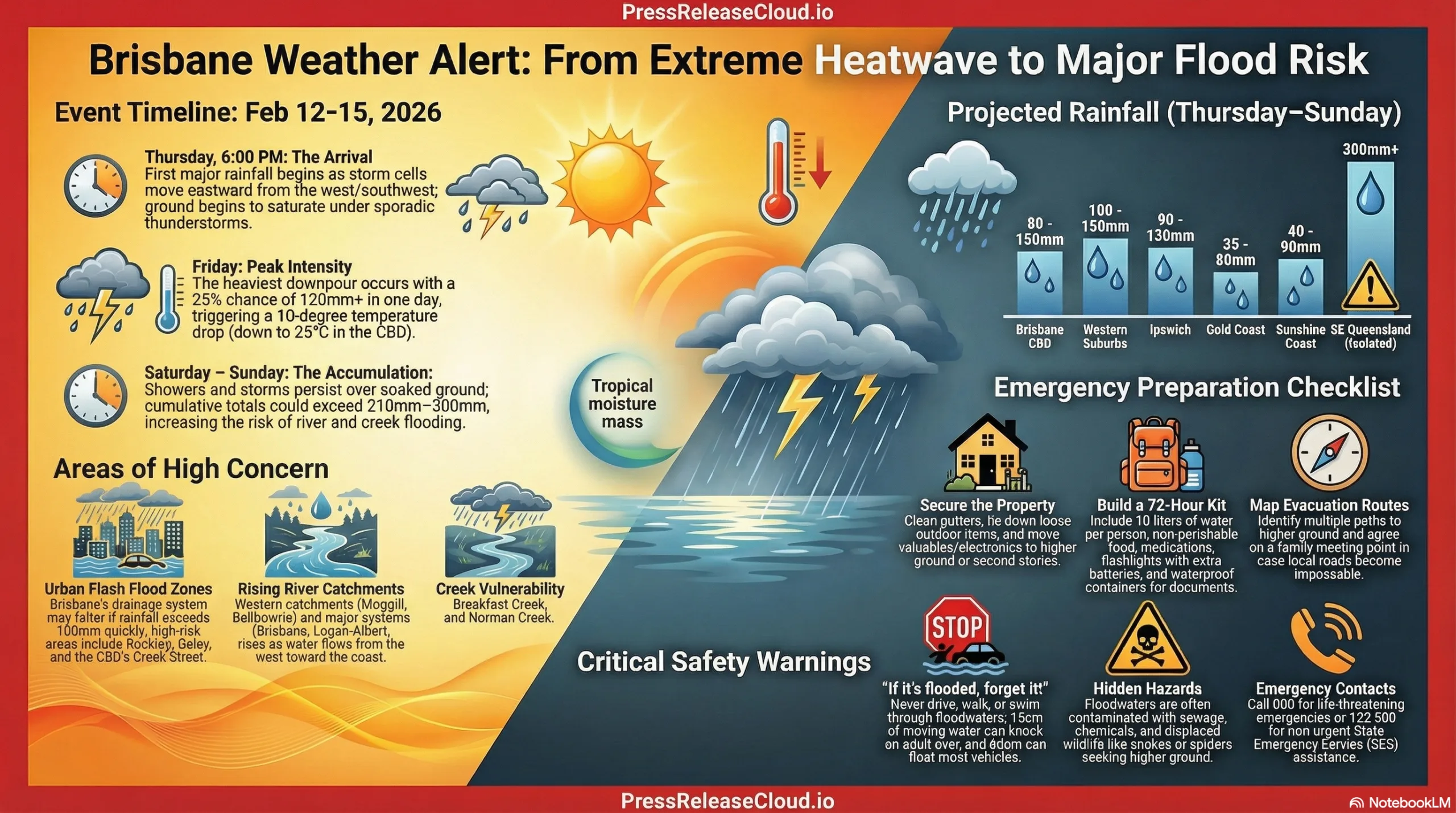
Queensland Flood Alerts: Storms to End Extreme Heatwave
Projected Rainfall Totals (Thursday–Sunday)
|
Region
|
Expected Rainfall Total
|
Isolated Peak Potential
|
|---|---|---|
|
Brisbane CBD
|
80–150mm
|
210mm (Cumulative)
|
|
Western Suburbs
|
100–150mm
|
>150mm (Daily)
|
|
Ipswich
|
90–130mm
|
150mm+
|
|
Gold Coast
|
35–80mm
|
100mm+
|
|
Sunshine Coast
|
40–90mm
|
120mm+
|
|
SE QLD (Isolated Highs)
|
150-250mm
|
>300mm (Cumulative)
|
Life-Threatening Emergencies
Triple Zero: 000
Storm & Flood Assistance
State Emergency Service (SES): 132 500
Local Updates & Sandbags
Brisbane City Council: 3403 8888
Official Information Portals
- Weather & Warnings: www.bom.gov.au
- Disaster Management: disaster.qld.gov.au
- Road Closures: qldtraffic.qld.gov.au
Emergency Broadcaster
ABC Local Radio: 612 AM
Forecasters Liam Smart and Daniel Hayes emphasize that the “So What?” of this event lies in the accumulation of rainfall over several days. While daily totals are concerning, the saturated landscape will eventually lose all absorption capacity. Smart notes that a 25% chance of 120mm+ rainfall represents a high-probability trigger for flash flooding, even as a 10-degree temperature drop provides temporary relief from the preceding heat.
A stalled low-pressure trough is expected to terminate a severe heatwave by bringing heavy rainfall and thunderstorms, with some regions anticipating over 300mm of precipitation.
Authorities have issued flood warnings for Brisbane and surrounding catchments, highlighting risks of flash flooding and rapid river rises. Residents are encouraged to prepare emergency kits, finalize evacuation plans, and secure their properties against potential water damage.
The sources emphasize public safety, urging individuals to avoid driving through floodwaters as temperatures are projected to drop by 10 degrees. Overall, the text serves as a comprehensive guide for local communities to navigate the transition from extreme heat to dangerous storm conditions.
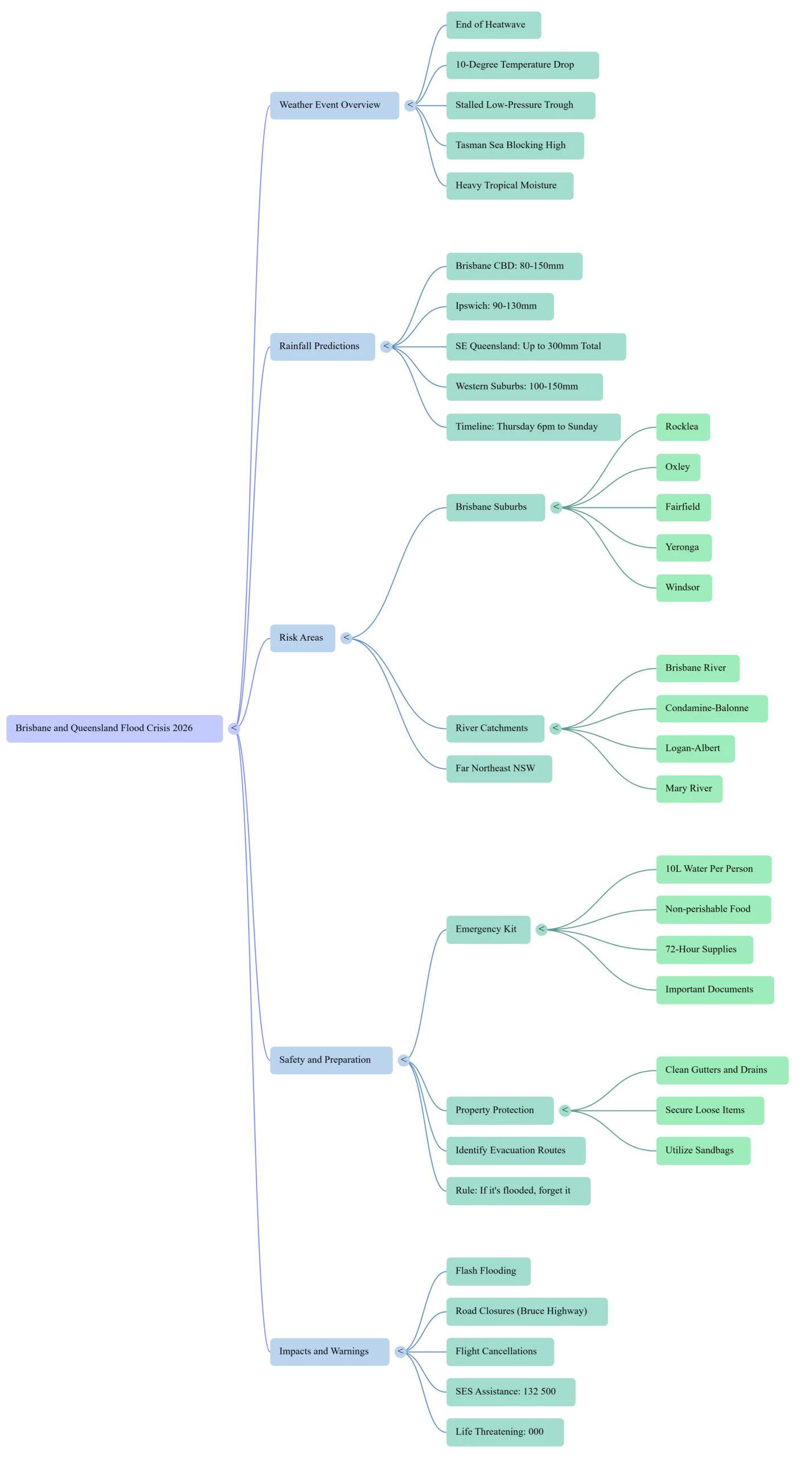
Mind Map by PressReleaseCloud.io (All Rights Reserved)
The sudden transition from a scorching heatwave to severe storms and flooding is primarily being driven by a “perfect storm” of meteorological factors, specifically a stalled low-pressure trough interacting with a blocking high-pressure system.
Here is a breakdown of the specific atmospheric mechanics at play:
• Blocking High-Pressure System: Normally, weather systems move from west to east. However, a high-pressure system centered over the Tasman Sea is acting like an atmospheric “dam” or block. This prevents the low-pressure trough from moving away, effectively trapping the rain-bearing system over Queensland for multiple days. This stalling effect is why the rainfall is expected to be so persistent and high in volume.
• Upper-Level Trough & Cool Winds: The relief from the heatwave is coming from a significant upper-level trough passing through the region, which is dragging cooler winds from the south in its wake. This influx of cooler air, combined with the dense cloud cover blocking the sun, is expected to drop temperatures by approximately 10 degrees.
• Atmospheric Instability: The clash between the existing extreme heat (which reached 37°C in places) and this incoming storm front creates severe atmospheric instability. This instability is what fuels violent weather events, including frequent lightning, damaging winds, and the rapid formation of storm cells.

Brisbane Flood Safety Guide: High-Risk Zones & Emergency Protocols (February 2026)
To all Brisbane residents: We are currently transitioning from a severe, multi-day heatwave (35°C–37°C) into a high-risk meteorological event. A stalled low-pressure trough, pinned by a blocking high-pressure system in the Tasman Sea, has created an “atmospheric dam” effect. This will result in persistent, heavy rainfall and severe thunderstorms concentrated over South East Queensland. Friday is identified as the period of maximum risk.
——————————————————————————–
1. Current Weather Alert & Rainfall Forecast
The extreme heatwave will end abruptly on Thursday evening as a dangerous storm system moves through the region. Temperatures are expected to drop by approximately 10°C. This transition brings extreme atmospheric instability, leading to violent weather, lightning, and damaging winds.
| Location | Predicted Rainfall (24-48 Hours) | Cumulative 4-Day Potential (Thu–Sun) |
| Brisbane CBD | 80mm – 150mm | Up to 210mm – 300mm |
| Western Suburbs | 100mm – 150mm | Up to 210mm – 300mm |
| Ipswich | 90mm – 130mm | Up to 210mm – 300mm |
——————————————————————————–
2. High-Risk Flood Zones: Suburb & Catchment Analysis
Rainfall runoff will be exacerbated by clay-heavy soils and ground already saturated from recent high humidity. These factors will trigger rapid flooding once thresholds are met.
2.1 Low-Lying Vulnerable Suburbs
The following areas are highly susceptible due to their low elevation relative to sea level and proximity to major waterways:
- Rocklea, Oxley, Fairfield, Yeronga, and Windsor.
- Topographical Risk: These suburbs sit in natural basins or at the bottom of steep slopes, where water collects faster than drainage systems can discharge it.
2.2 Urban Flash Flooding & CBD Risks
Paved surfaces in the CBD and inner suburbs prevent absorption, leading to dangerous runoff.
- Creek Catchments: Breakfast Creek, Enoggera/Kedron Brook, and Norman Creek. If rainfall exceeds 100mm in a short window, these creeks can swell to dangerous levels within minutes.
- CBD Specific Risks: Creek Street, Eagle Street, and South Brisbane. These areas face increased risk if high tides obstruct the drainage of stormwater into the river.
2.3 Western Catchment Areas
- Communities at Risk: Moggill, Bellbowrie, and Karana Downs.
- River Management: While the Wivenhoe and Somerset Dams are crucial in managing water flows from the upper reaches, smaller tributaries in these western suburbs may still overflow, leading to road closures and isolation.
——————————————————————————–
3. Storm Timeline & Critical Warning Signs
The transition from heat to storm begins Thursday evening.
- Thursday, 6:00 PM: First storm cells form west/southwest of Brisbane. Warning signs: Frequent lightning, thunder, and damaging winds.
- Thursday Night – Friday Morning: Rain intensifies. Soil reaches a saturation point, meaning any further rain becomes immediate runoff.
- Friday (Highest Risk): Peak rainfall intensity expected during morning and midday. Sustained downpours on saturated ground will trigger flash flooding.
- Saturday – Sunday: Showers and isolated storms persist. An additional 20mm–40mm is expected on already soaked ground, potentially worsening existing floods.
——————————————————————————–
4. Property Preparedness & Mitigation Steps
Residents must complete the following priority actions before conditions deteriorate on Thursday night:
- Clear Gutters and Drains: Remove all debris to ensure maximum flow and prevent water backing up into roof cavities.
- Secure Loose Outdoor Items: Tie down furniture, umbrellas, and equipment to prevent them from becoming windborne or floating into drainage paths.
- Elevate Valuables: Move electronics, medical equipment, and important documents to the highest level of your home.
- Utilize Sandbags: If your property has a history of water ingress, collect sandbags from designated Brisbane City Council depots to block entry points.
——————————————————————————–
5. 72-Hour Emergency Kit Requirements
Prepare for potential isolation or power outages. Ensure your kit is stored in a waterproof, accessible location.
Life Sustenance
- [ ] Bottled water (10 liters per person)
- [ ] Non-perishable food (3-day supply)
- [ ] Baby formula/diapers and pet supplies (food/water/restraints)
Medical & Safety
- [ ] Prescribed medications and a comprehensive first aid kit
- [ ] Flashlights with extra batteries
- [ ] Portable battery-powered or hand-cranked radio
Documentation & Tech
- [ ] Mobile phone power banks (fully charged)
- [ ] Waterproof container for ID, insurance, and property deeds
- [ ] Extra set of warm, dry clothes
——————————————————————————–
6. Evacuation Planning & Safe Transit Protocols
- Identify Exit Paths: Map multiple routes to higher ground. Note that rural properties and farms in the west face a high risk of isolation as low-level bridges and creek crossings submerge.
- Watch vs. Warning: A Flood Watch means flooding is possible; stay alert. A Flood Warning means flooding is expected or occurring; take immediate action.
- Vulnerable Residents: Arrange assistance for those with mobility issues now. Most evacuation centers accept pets with proper bedding and restraints.
STRICT WARNING: If it’s flooded, forget it.
- 15cm: Flowing water at this depth can knock an adult off their feet.
- 60cm: This depth can float and carry away most vehicles, including 4WDs.
——————————————————————————–
7. Post-Flood Safety & Recovery Hazards
Post-flood environments contain hidden dangers, including sewage contamination, displaced wildlife (snakes), and industrial runoff.
Immediate Post-Flood Rules:
- Food Safety: Discard all food, including canned goods, that has come into contact with floodwater.
- Electrical Safety: Do not turn on your power or use electrical appliances until the property has been inspected and cleared by a licensed electrician.
- Water Safety: Continue to boil all tap water or use bottled supplies until authorities confirm the local water supply is safe for consumption.
——————————————————————————–
8. Consolidated Emergency Contacts & Information Sources
Life-Threatening Emergencies
- Triple Zero: 000
Storm & Flood Assistance
- State Emergency Service (SES): 132 500
Local Updates & Sandbags
- Brisbane City Council: 3403 8888
Official Information Portals
- Weather & Warnings: www.bom.gov.au
- Disaster Management: disaster.qld.gov.au
- Road Closures: qldtraffic.qld.gov.au
Emergency Broadcaster
- ABC Local Radio: 612 AM