


Key Takeaways
- The debate about the role of artificial intelligence in creativity is misguided, as it has always been a convergence of vision, tools, collaborators, constraints, and accidents.
- Artists and filmmakers have always relied on new tools and technologies to expand their creative possibilities.
- The use of AI does not dilute originality, but rather amplifies it, as seen in the work of artists like David Hockney and filmmakers like Christopher Nolan and Ridley Scott.
- The fear that AI will annihilate creativity is unfounded, as it is the vision and imagination of the human creator that makes a work truly original.
- AI can accelerate production, lighten drudgery, and democratize experimentation, but it cannot create something truly original.
The Legacy of Frank Gehry and Robert A.M. Stern
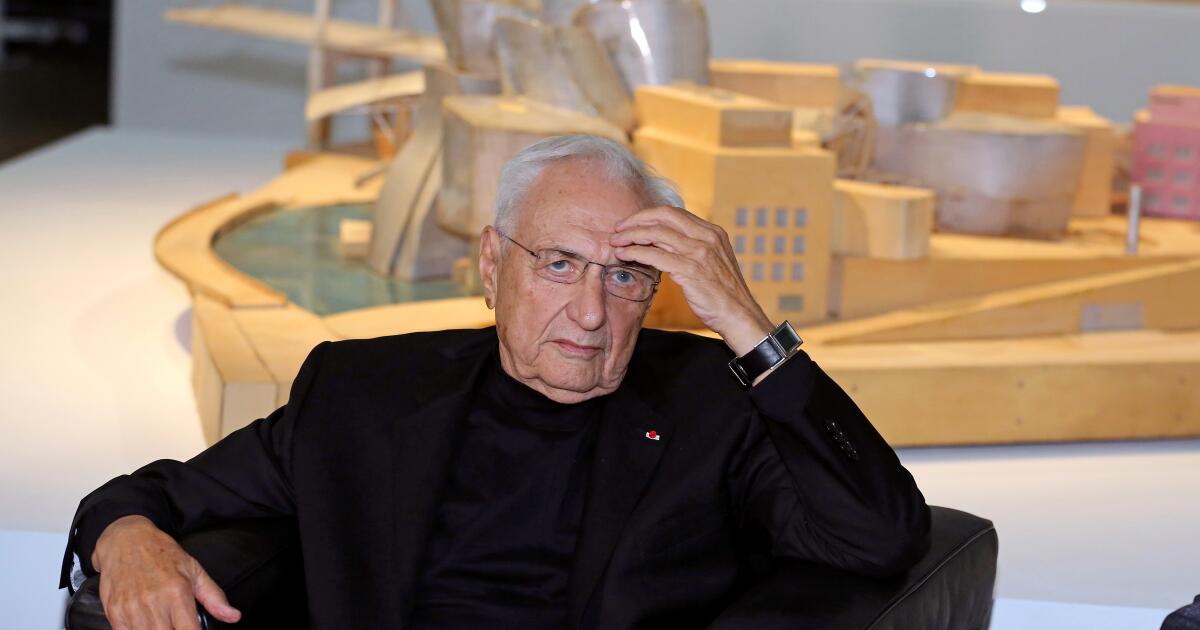
The recent passing of architects Frank Gehry and Robert A.M. Stern has invited a larger reflection on the role of technology in creativity. Both architects relied heavily on digital tools to realize their visions, yet their styles remained unmistakable. This highlights the truth that artificial intelligence now forces us to confront: even as we cling to a romantic myth that creativity is an unmediated human act, we quietly celebrate artists who embrace new tools. The debate about the role of AI in creativity is a tension that shapes the stories we see, how they’re made, and who gets to make them.
The Tension in Hollywood
Nowhere is this tension more visible than in Hollywood, where creative labor is both cultural identity and economic lifeblood. Some creators now pledge that their projects are "100% human-made," as though artistic purity depends not on vision but on the mere absence of certain tools. AI becomes the latest stand-in for anxieties about erosion of originality, replacement of human imagination, and the fear that mediocrity will proliferate. However, these anxieties rest on a misunderstanding of how creativity has always worked. Filmmakers, artists, musicians, designers, and animators are surrounded by technologies that already shape creative work.
The Evolution of Creativity
Consider artist David Hockney, who throughout his career, has embraced every imaging technology that crossed his path. The technology didn’t dilute his originality; it amplified it. Cinema evolved the same way, with directors like Christopher Nolan and Ridley Scott using advanced technology to expand storytelling. Even the classic era leaned on its own innovations, and the tools change, but the artistic fingerprints never do. Today’s debate forgets that filmmaking has always relied on proto-AI systems, and the process was never "pure." Audiences never cared, and the tools have always been a means to an end, not an end in themselves.
The Anxiety of AI
The fear that AI could "generate" the next "Breaking Bad" echoes the old Infinite Monkey Theorem. But this confuses combinatorial output with artistic vision. AI might remix a soliloquy, but it is not Shakespeare. Originality isn’t clever rearrangement; it’s the vision that makes the familiar suddenly new. A synthetic episode may faintly resemble the thing it imitates, but even cursory inspection reveals what’s missing: internal structure, tension, clarity, and an integrity that emerges from human imagination, not statistical prediction. AI can generate the plausible, not the inevitable outcome.
The Flood of Mediocrity
The real question is whether audiences will settle for the facsimile once the novelty wears off. These fears are not new, and they erupted with mass-market paperbacks, then again with home video, and again with streaming. While each expanded the supply of middling work, no one ever confused a pulp paperback with Joan Didion, or the hundredth forgettable slasher sequel with John Carpenter. Quality contrasts even more sharply against undistinguished, mass-produced output. The anxiety is not that AI will annihilate creativity, but that AI exposes a truth we have long preferred to ignore: creativity has never been the immaculate myth we romanticize.
The Role of AI in Creativity
AI can accelerate production, lighten drudgery, and democratize experimentation. It can turn days of rotoscoping or matte-painting revisions into hours, or generate dozens of costumes and set variations that human designers can build on. It helps artists iterate more freely, test ideas more rapidly, and clear logistical barriers that once constrained entire mediums. But what AI cannot do is create a Gehry building, a Hockney painting, a Nolan film, or a Gilligan story that isn’t, sooner or later, exposed as derivative. The imitation always shows, and it is the vision and imagination of the human creator that makes a work truly original.