


Key Takeaways
- The Supreme Court’s conservative majority has ruled in favor of Texas lawmakers, allowing their new congressional map to move ahead despite a lower court finding that the Texas legislature had likely conducted a racial gerrymander.
- The map could yield five more seats for the GOP, giving Republicans an edge in the redistricting fight.
- The redistricting battle could tilt about 12 or 14 seats toward Republicans, while Democrats could counter with around nine seats pushed their way.
- The outcome of pending court challenges and state legislative votes will ultimately determine the impact of redistricting on the 2026 election.
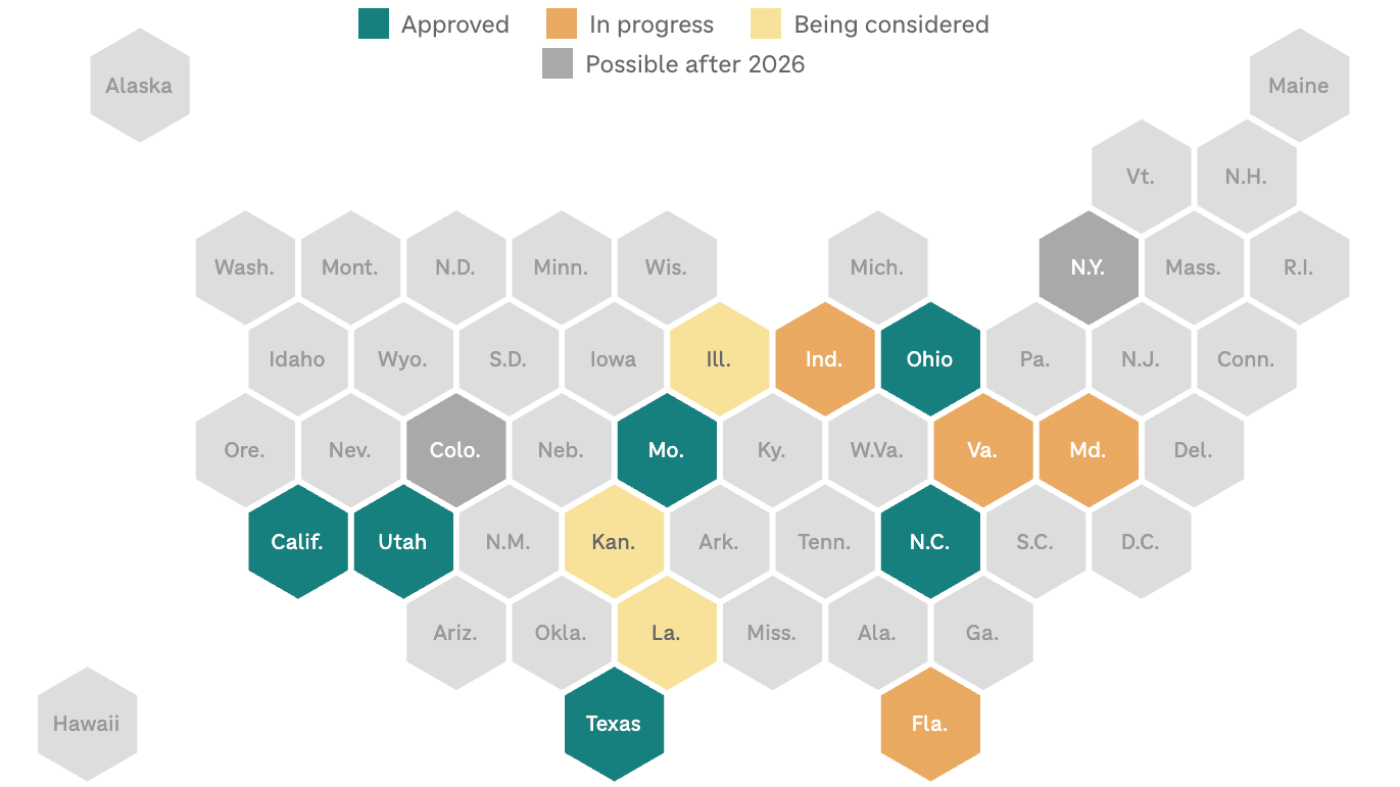
- President Trump’s push for redistricting has set off a nationwide redistricting race, with states like California, Florida, and Missouri taking action to counter or support the effort.
Introduction to Redistricting
The recent Supreme Court ruling in favor of Texas lawmakers has given Republicans an edge in the redistricting fight, which was kicked off by President Trump. The court allowed the new congressional map to move ahead, despite a lower court finding that the Texas legislature had likely conducted a racial gerrymander. This map could yield five more seats for the GOP, which could have significant implications for the 2026 election. The House of Representatives is currently closely divided, with 220 seats held by Republicans and 213 held by Democrats. The sitting president’s party tends to lose seats in midterm elections, so the redistricting battle could be crucial in determining the outcome of the election.
The Redistricting Process
Redistricting is typically done by state legislatures, and Republicans control more legislatures around the country than Democrats. This gives Republicans more options for redistricting, as they can draw lines to benefit their party. However, some states that Democrats control have legal barriers to partisan gerrymandering, or they have laws requiring that special commissions draw the lines. For example, Virginia’s Democratic-led legislature has voted to hold a special election that could amend the state constitution to allow redistricting. If it passes, the redistricting could tilt two or three seats toward Democrats. The Democratic governor of Maryland has also formed a commission to make redistricting recommendations, but that state already only has one Republican-held House seat to target.
State-Level Redistricting Efforts
Several states are taking action on redistricting, with varying levels of success. In Indiana, lawmakers are meeting on redistricting, and the state House has passed a new map that could help the GOP win two Hoosier seats. However, Republicans in the Senate are divided on the issue, and some lawmakers have faced anonymous threats to their families over the last few weeks. In Missouri, petitioners face a deadline on signature collections that could block the redistricting until a public vote is held. Florida’s Republican Gov. Ron DeSantis is urging Republicans in control of the legislature to redistrict this spring and turn as many as five seats toward their party. However, Florida has laws against partisan gerrymandering and could be limited by bans on racial gerrymandering in the federal Voting Rights Act.
The Impact of the Voting Rights Act
The Supreme Court is currently considering the Voting Rights Act, which outlaws intentional attempts to weaken the voting power of minority communities by "cracking" them apart into new districts or "packing" them into one district. If the court weakens the VRA, it could allow more redistricting that would likely work in the Republicans’ favor. This could have significant implications for the 2026 election, as it could allow Republicans to draw lines that benefit their party at the expense of minority communities. The VRA has been a crucial tool in protecting the voting rights of minority communities, and any changes to the law could have far-reaching consequences.
Conclusion and Future Outlook
The redistricting battle is ongoing, with several states taking action to counter or support President Trump’s push for redistricting. The outcome of pending court challenges and state legislative votes will ultimately determine the impact of redistricting on the 2026 election. While Republicans currently have an edge in the redistricting fight, Democrats are working to counter their efforts and protect the voting rights of minority communities. The Supreme Court’s ruling on the Voting Rights Act will be crucial in determining the future of redistricting, and any changes to the law could have significant implications for the 2026 election and beyond. Ultimately, the redistricting battle will be a key factor in determining the outcome of the 2026 election, and it will be important to watch how it unfolds in the coming months.