Key Points
- Mirror provides a flexible fitness experience that mainly focuses on classes led by instructors that require minimal equipment, while Tonal offers digital weight resistance up to 200 pounds for dedicated strength training
- Installation requirements are significantly different: Mirror can be mounted on the wall or free-standing, while Tonal needs to be securely mounted on wall studs
- Tonal is excellent in strength progression with its AI-powered weight adjustments and form feedback, making it perfect for those who prioritize muscle building
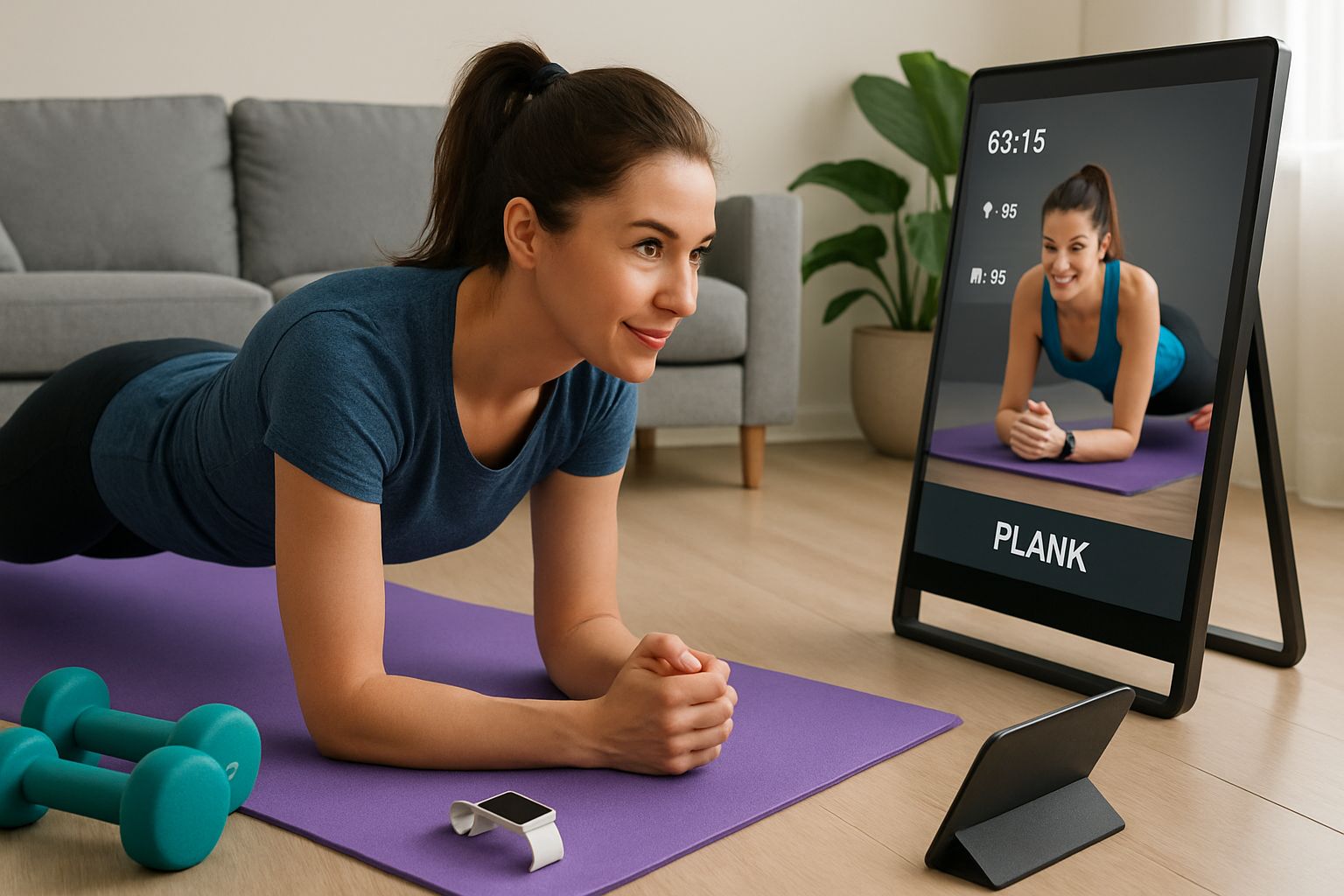
- Mirror’s reflective display allows you to check form while following instructors, offering a wider variety of workout styles beyond strength training
- Fitness enthusiasts should consider space requirements, training goals, and budget when choosing between these AI-powered home gym solutions
Smart Fitness Revolution: Mirror vs Tonal Showdown
The future of home fitness is here, and it’s mounted on your wall. As homeowners increasingly look for convenient, space-efficient workout solutions, two leading contenders have emerged in the smart fitness mirror category: Mirror and Tonal. While both devices aim to turn your living space into a high-tech gym, they approach this goal through distinctly different technologies and philosophies. This comprehensive comparison will help you determine which system aligns with your fitness aspirations, space constraints, and budget.
Both Mirror and Tonal rely on artificial intelligence to bring personal training to your home, but they do so in very different ways. Mirror, which was bought by lululemon in 2020, is primarily a reflective display that broadcasts fitness classes and allows you to check your form. Tonal, on the other hand, includes actual resistance training equipment in its design, using electromagnetic technology to provide up to 200 pounds of digital resistance. This fundamental difference affects everything from how each system is installed to the types of workouts each system is best at delivering.
It’s essential for homeowners to understand these differences, especially if they’re considering making a significant investment in their health without sacrificing their home’s aesthetic appeal. As we delve into the specifics of each system, you’ll see how Mirror and Tonal are two different visions of the future of home fitness. One focuses on a variety of classes and minimal equipment, while the other focuses on progressive strength training and digital weight technology. Let’s take a closer look at how each system might fit into your home and fitness journey, with expert advice on creating the perfect home workout environment for your specific needs.
Comparing Costs
There is a significant difference in cost between the Mirror and Tonal systems, which is a reflection of their differing functionalities. The Mirror system starts at around $1,495 for the basic package, while the Tonal system is more expensive, starting at around $2,995 for the base unit. This cost difference of about $1,500 is due to the additional technology and resistance training features that are included in the Tonal system.
After the initial purchase of the device, both systems require a continuous membership to access their content libraries. Mirror’s membership is about $39 a month, while Tonal’s membership is about $49 a month. Both memberships allow unlimited user profiles, which allows multiple people in the household to have their own accounts and workout records under one payment.
When considering the full range of features, extra accessories may affect your total expenditure. Mirror provides several packages that come with exercise equipment such as weights, bands, and heart rate monitors, which could add $200-$700 to your initial purchase. Tonal necessitates its smart accessories bundle for $495, which comprises the smart handles and bar needed to fully exploit the digital weight system. When tallying up total first-year costs including hardware, accessories, and subscription fees, you should anticipate investing roughly $2,000-$2,700 for Mirror and $3,900-$4,100 for Tonal.
How much space do you need and how do you install them?
These two systems have very different installation requirements, which could be a big factor in your decision. Mirror is very flexible, offering both wall-mount and stand options, and it doesn’t take up much space at all – it’s only 22″ wide by 53″ tall and less than 2″ deep. You need about 6 feet of clearance in front of the Mirror for most workouts, but it can fit into small spaces. The stand option is especially useful for people who rent their home or just don’t want to damage their walls.
In comparison, Tonal has more exacting installation requirements. It needs to be securely fixed to wall studs, which necessitates professional installation (included with the purchase price) and makes it difficult to move once it’s in place. The unit itself is about 22″ wide by 51″ tall and sticks out 5″ from the wall, but its arms extend outward when in use, requiring 7 feet of space in front and 7 feet of unobstructed wall space for full range of motion exercises. Plus, you’ll need a ceiling clearance of at least 7 feet 10 inches for overhead movements. For those interested in integrating Tonal into a smart home setup, you might explore Google Assistant smart home device integrations for enhanced functionality.
Quick Look at Space Needs:
Mirror: 22″ W x 53″ H x 1.4″ D, 6′ free space in front
Tonal: 22″ W x 51″ H x 5″ D, 7′ free space in front, 7′ clear wall space, 7’10” ceiling height
Setting up these systems also differs. Putting up the Mirror can be as simple as hanging a TV on the wall or even simpler if you choose the stand option. Tonal, on the other hand, needs to be installed by a professional because it’s heavy and needs to be plugged into an electrical outlet. The installers will find the studs in your wall and make sure the unit can handle the pressure you’ll put on it when you’re lifting weights. For those interested in smart home device integrations, you might want to explore Google Assistant smart home device integrations to enhance your home gym experience.
Key Technological Aspects
Mirror and Tonal have two distinct technological approaches to smart fitness. Mirror features a 40″ full HD display with a reflective surface, allowing you to see the instructor and yourself at the same time. It includes a camera for optional live feedback during classes and a heart rate monitor, but it doesn’t have motion-tracking sensors for automated form correction. Its main technological focus is on delivering content, not resistance training.
At the heart of Tonal’s technology is its patented digital resistance system that uses electromagnetic force to offer up to 200 pounds of resistance without any physical weights. It has built-in 3D motion sensors that track your movement patterns and form, and its AI analyzes your performance to adjust the weight in real-time. The 24″ touchscreen display is both your workout guide and strength training control center, with accelerometers in the smart accessories providing even more movement data.
Both Mirror and Tonal offer workout experiences powered by artificial intelligence, but they focus on different aspects. Mirror centers around instructor-led workouts and provides basic metrics such as heart rate and calories burned. Tonal, on the other hand, provides extensive strength metrics such as volume, power, range of motion, and time under tension. These technological differences underline Mirror’s focus on class-based workouts versus Tonal’s emphasis on data-driven strength training. Both systems use technology to address different fitness issues.
Transforming Home Workouts with Mirror’s AI Technology
Mirror has brought a revolution in the home fitness experience by creating an immersive workout environment that blends in with your home decor. When not in use, Mirror serves as a stylish full-length mirror, but when turned on, it becomes an interactive fitness portal that connects you with top-notch instructors. This dual functionality is particularly attractive to homeowners who are conscious of preserving their interior design aesthetic while still prioritizing health and wellness. For those interested in integrating smart technology into their homes, exploring Google Assistant smart home device integrations could further enhance the convenience and functionality of their living spaces.
Its streamlined look hides advanced technology that provides a studio-like feel without needing a separate gym room. Mirror projects instructor-led workouts onto its reflective surface, allowing you to keep up with classes while watching your own form and movements. This visual feedback loop aids users in maintaining correct alignment and getting the most out of their workouts without the need for additional sensors or equipment. For more insights into practical technology use, explore these Amazon Alexa use cases in daily life.
Despite its seemingly simple design, Mirror boasts a high level of technological complexity. Its AI algorithms are hidden behind the reflective display, tracking your workout history, fitness goals, and physical limitations to suggest suitable classes and modifications. This personalized approach helps avoid injury while gradually progressing your fitness journey based on your individual abilities and progress.
Interactive Screen and Movement Monitoring
The 40-inch 1080p screen of the Mirror doubles as a workout display and a reflective surface, offering a unique interface where you can view instructors while also watching your own form. This visual feedback method allows users to make adjustments in real time without requiring sophisticated movement sensors. The screen quality offers sharp, clear visuals of instructors showing the correct method while retaining the reflective qualities needed for self-monitoring. For those interested in smart home technology integration, you might explore how Google Assistant can enhance your workout experience.
Although Mirror doesn’t have the advanced motion tracking that Tonal does, it does include basic performance metrics through connected devices. The system can connect with Bluetooth heart rate monitors to show real-time cardiovascular data and estimate how many calories are burned during workouts. These metrics are displayed directly on the screen, letting you measure intensity and adjust effort as needed during your workout.
If you’re looking for a more tailored experience, Mirror provides the option for individual personal training sessions via its integrated camera system. This function links you with qualified fitness experts who can watch your technique and offer immediate adjustments and motivation, combining the ease of working out at home with the benefits of professional instruction. The camera comes with a physical privacy cover for when it’s not in use, alleviating any potential privacy worries.
Real-Time and Pre-Recorded Workout Experience
The foundation of Mirror’s fitness service lies in its extensive content library, which offers thousands of pre-recorded classes across more than 50 distinct workout types. Whether you’re interested in high-intensity interval training, strength training, yoga, barre, pilates, or dance, the wide range of choices guarantees you’ll find workouts that match your interests and objectives. Classes can last anywhere from 5 to 60 minutes, making it easy to fit a workout into your busy schedule or to find something that suits your current energy level.
The Mirror offers live classes, which adds a sense of community to the experience. There are multiple live classes every day in various workout categories, which gives users something to look forward to. During these live classes, instructors may give you a shout-out based on your metrics and milestones, which makes you feel connected to the class even though you’re not physically there.
Correction of Form and Instructor Input
Mirror depends mainly on the guidance of the instructor and self-assessment using the reflective display for form correction. Detailed verbal cues about correct alignment and common form mistakes are provided by trainers throughout classes, allowing you to make adjustments by comparing your reflection to the demonstration. This approach is effective for basic movement patterns, but for complex exercises requiring nuanced technique adjustments, it may be inadequate.
If you want a more tailored experience, Mirror offers individual training sessions for an extra fee. In these one-on-one sessions, certified trainers can see you through the Mirror’s camera and give you real-time corrections on your form based on your body mechanics and limitations. These half-hour appointments need to be booked ahead of time but offer a level of personalization that is similar to in-person training at a much lower cost.
The fact that Mirror doesn’t have automatic form detection is a major technological disadvantage when compared to Tonal. Because there are no motion sensors to track joint angles and movement patterns, the system can’t provide AI-powered form corrections during regular classes. This means users must take on more responsibility to monitor themselves and apply general instructor cues to their specific situation.
Small Space Required
The Mirror’s main selling point is its small size and the minimal space it requires. It only extends 1.4 inches from the wall, making it perfect for apartments, small homes, or rooms that serve multiple purposes and need to save space. Its compact design allows it to fit in living rooms, bedrooms, or even hallways without drastically changing the room’s function or look.
Most of the workouts offered by Mirror need little to no extra equipment, with many of the classes designed for bodyweight exercises that only require the space directly in front of the display. For workouts that incorporate resistance training, Mirror offers packages that include hand weights, ankle weights, resistance bands, and a heart rate monitor. Even with these accessories, the total equipment footprint is still modest compared to traditional home gym setups or the wall-mounted arms of Tonal.
Equipment Options for Mirror:
Basic Package: Only the Mirror
Essentials: The Mirror plus a heart rate monitor, fitness band, and mat
Pro Package: The Mirror plus a heart rate monitor, fitness band, mat, weights, ankle weights, and a foam roller. For more details, check out this review of workout mirrors.
Tonal’s Electronic Weight System and AI Personal Training
Tonal completely revolutionizes the concept of resistance training at home. It does not have the cumbersome weight stacks that are common in traditional home gyms or the bodyweight focus of Mirror. Instead, Tonal’s patented electronic weight system uses electromagnetic technology to provide up to 200 pounds of resistance. This development does away with the need for physical weight plates, while still providing resistance that feels very much like traditional weights. All this is housed in a wall-mounted unit that is about the size of a flat-screen TV. For a deeper understanding of how technology is reshaping industries, explore Microsoft’s gaming revolution through cloud computing.
Tonal’s main selling point is its smart weight system. When you first set up Tonal, the AI will assess your strength across different movements and set appropriate starting weights for each exercise. As you workout, Tonal will automatically adjust the resistance based on your performance, increasing the weight if it’s too easy and decreasing it if it’s too hard. This feature removes the guesswork from strength training and ensures you’re always getting the best workout possible.
More than just offering resistance, Tonal’s high-tech sensors and artificial intelligence algorithms watch your movements in real time and provide practical feedback on your form, speed, and range of motion. This constant evaluation forms a virtual coaching experience that helps avoid injury while making your workout as effective as possible. For those who are serious about strength training and are used to having spotters or trainers in conventional gyms, these intelligent features help close the gap between training in a commercial gym and working out safely at home.
200-Pound Digital Weight System
One of Tonal’s most innovative features is its digital weight system, which can provide up to 200 pounds of resistance (100 pounds per arm) without the need for traditional weights. This digital resistance is created through an electromagnetic mechanism that uses motors and magnets to create a smooth, consistent tension throughout each exercise. Unlike traditional cable machines or free weights, Tonal can instantly adjust the resistance in the middle of a repetition, allowing for advanced training techniques like eccentric loading and burnout sets that would typically require the help of a personal trainer.
Tonal’s design is compact and conceals all of its advanced technology in a sleek wall-mounted unit. This design eliminates the need for weight racks, multiple dumbbells, or bulky equipment. Tonal’s arms extend and rotate to accommodate dozens of movement patterns and exercises, from basic presses and rows to more complex rotational movements. When not in use, these arms fold neatly against the main unit, maintaining a streamlined profile that occupies minimal visual space in your home. For a detailed comparison of smart home gym equipment, check out this comparison of smart home gym equipment.
Tonal has been designed with the serious lifter in mind, offering a digital weight system that feels like the real thing. It takes into account the momentum and gravity of free weights, making the lifting experience feel natural. This is a safer alternative to having heavy free weights in your home, especially if you’re training alone without a spotter. The authentic feel of the resistance, combined with the safety features, makes Tonal a great choice. For those interested in integrating smart technology into their fitness routine, check out Google Assistant smart home device integrations for added convenience.
Automated Weight Adjustment Capabilities
One of Tonal’s most notable features is its smart weight management system, which sets it apart from traditional gym equipment and other fitness mirrors. The system assesses your strength capabilities during your initial workout and sets personalized starting weights for different exercises. As you continue to use Tonal, the system automatically adjusts the resistance based on your performance data. If an exercise becomes too easy, it will increase the weight, and if you’re having difficulty maintaining proper form, it will decrease the weight.
The automatic weight adjustment feature removes the uncertainty that often comes with progressive overload, making sure you’re always working out at the best resistance for your current fitness level. The system also takes into account fatigue during a workout, noticing when performance drops and adjusting the following sets accordingly. For those who usually are reluctant to increase weights without a trainer’s advice, this automated progression helps overcome stagnation and speed up strength growth.
Intelligent Gear and Motion Monitoring
Tonal’s intelligent gear goes beyond simple handles, using advanced technology to elevate your workout. The smart handles and bar are equipped with accelerometers and other sensors that sync with the main unit, giving you a detailed analysis of your speed, fluidity, and range of motion. This connectivity allows the system to know when you’ve finished a rep, keep an eye on any changes in your form, and give you immediate feedback during your workout.
These accessories come with a quick-release mechanism that allows for fast transitions between exercises. This reduces downtime during circuit training and keeps your heart rate up for cardio benefits. You can also add on a rope accessory, bench, and roller to expand your exercise options beyond the basic handles. This gives you a full gym experience in a small space. The bench and roller are sold separately but they work seamlessly with the programmed workouts.
Unlike other home gym equipment, Tonal doesn’t just count your reps. It uses advanced motion tracking to analyze your movements. This means it can pick up on small form mistakes like lifting more with one side, not moving through a full range of motion, or moving in a shaky or unstable way. When it detects these issues, it gives you tips to correct your form. This helps you avoid injury and get better results from your workout. It’s like having a personal trainer watching you, especially when you’re doing complex moves where form really matters.
Strength Assessment Technology
Tonal starts your fitness journey with a comprehensive strength assessment to personalize your experience. It tests your maximum strength across basic movements like push, pull, and squat. This 30-minute assessment gives you immediate insights into your strengths and weaknesses, highlighting any imbalances between muscle groups or movements. For more on how technology is transforming fitness, check out the Google Assistant smart home device integrations.
Tonal makes it easy for you to get started on a new strength program by using your assessment results to create a personalized strength score and set the right starting weights for all your exercises. This eliminates the guesswork often involved when starting a new strength program and ensures that you’re training optimally right from the start. Tonal also periodically reassesses your strength to track your progress and adjust your program as needed. This gives you a clear measure of your progress, which can help keep you motivated.
Tonal’s AI coaching system uses the strength assessment data to make smart suggestions for program selection and exercise modifications based on your specific capabilities, beyond just setting initial weights. This personalization helps users with significant strength disparities or movement limitations avoid overtraining vulnerable areas while systematically addressing weaknesses. This comprehensive assessment goes far beyond what’s typically available in other home fitness systems, demonstrating Tonal’s commitment to serious strength development.
Spotter Mode and Safety Features
One of the most groundbreaking features of Tonal is its digital spotter mode. This mode can tell when you’re having difficulty with a weight and automatically lowers resistance to help you safely finish the set. This technology mimics the help a human spotter would give in a normal gym setting, letting you train to momentary muscle failure without the usual safety risks that come with lifting heavy weights by yourself. For exercises such as bench press or squats where getting trapped under weight is a serious risk, this feature gives essential reassurance.
Aside from the spotter mode, Tonal includes a variety of other safety features, such as electronic weight release buttons that can immediately turn off resistance in case of an emergency. The system also keeps track of the speed of your movements and can detect sudden changes that might suggest you’re losing control, automatically reducing the weight before an accident happens. These multiple safety features make Tonal much safer than conventional home weight training equipment, especially for individual training sessions. For more insights, check out this comparison of smart home gym equipment.
Comparing the Variety of Workouts
Mirror and Tonal, two major players in the home gym AI technology market, have different workout libraries that reflect their unique hardware capabilities and fitness philosophies. Mirror’s library is expansive, offering thousands of on-demand classes in over 50 different workout categories. These range from strength and HIIT to dance, yoga, Pilates, boxing, and even specialized programs like pre/postnatal fitness. This variety of class types makes Mirror a great choice for households with a range of fitness interests or for individuals who like to mix up their workouts to keep things interesting.
Although Tonal’s content library is smaller in terms of the total number of classes, it offers more depth when it comes to strength and resistance training. The system has hundreds of guided programs that are organized by goals such as building muscle, losing weight, or improving athletic performance. Each program offers a progressive structure over 3-4 weeks. Tonal also offers specialty workouts for recovery, mobility, and cardio, but these categories are not as extensive as their strength offerings.
Both Mirror and Tonal release new content every week to keep users engaged and prevent workouts from becoming stale. Mirror puts a lot of emphasis on new class formats and variety of instructors, while Tonal is more focused on expanding its program options and strength-specific innovations. If you’re trying to decide which system is right for your household, you’ll need to consider whether you value workout diversity or strength specialization more.
Class-Based Training Options of Mirror
Mirror shines in providing fitness classes that are like those you would find in a studio, and they offer a wide variety of disciplines. The platform provides thousands of on-demand sessions that last from 5-60 minutes, so they can fit into any schedule and match any energy level. The types of classes include cardio, strength, yoga, barre, Pilates, boxing, dance, stretch, meditation, and family workouts, and each type offers multiple difficulty levels from beginner to advanced.
Many users find the Mirror experience motivating because the live class schedule adds community engagement. Instructors can provide personal encouragement based on your metrics and milestone achievements during live classes. Mirror also offers specialized program series that target specific goals like 30-day fitness challenges, weight management, or marathon preparation, providing structured progression over extended periods. For those interested in integrating technology into their fitness routines, exploring Google Assistant smart home device integrations can enhance the overall workout experience.
For those who enjoy a variety of workouts and thrive off the energy of a class instructor, Mirror offers a similar experience to a boutique fitness studio without the need to travel to multiple specialized facilities. The focus on the personality and teaching style of the instructor allows users to form connections that can help increase motivation and accountability, especially for those who have difficulty with self-directed workouts. This human element is one of the key features that sets Mirror apart from more technically-focused systems like Tonal.
Strength-Based Training with Tonal
Tonal’s training focuses on structured strength development through progressive overload and periodization. This system provides many multi-week programs created by top strength trainers, each of which follows established training principles such as progressive overload, strategic deloading, and workout splits. These programs usually last 3-4 weeks with 3-5 workouts per week, creating comprehensive training blocks that systematically build strength and muscle while preventing overtraining.
Outside of the structured programs, Tonal also offers standalone workouts that target specific parts of the body, movement patterns, or training goals. These individual sessions are perfect for when you need a quick workout or are recovering and can’t follow a full program. For those who are experienced in lifting, Tonal also has a “Free Lift” mode where you can access all the exercises and resistance features without any guided instruction. This allows for a fully personalized workout based on your preferences.
Tonal’s content stands out from Mirror’s due to the fusion of programming and hardware capabilities. The workouts are not just instructional videos but interactive experiences where the system actively chooses the weight, counts reps, times rest periods, and gives real-time feedback. This smooth link between content and hardware makes for a more unified training experience for strength-focused users who value measurable progression over class variety.
Customization and Evolving Exercise Routines
Mirror and Tonal both provide customization options, but their methods are quite different. Mirror customizes mainly by recommending classes based on your exercise history, stated preferences, and fitness objectives. The system recommends suitable class levels and modifications but does not automatically modify exercise parameters beyond these suggestions. If you have specific restrictions or conditions, Mirror lets you input this information to get modified exercise suggestions during classes. For a deeper comparison of smart home gym equipment, check out this comparison of Mirror vs Tempo vs Tonal.
Tonal’s personalization is more profound in the actual workout experience through its adaptive weight technology. The system continues to analyze performance data to adjust resistance levels, targeting optimal training stimulus in real-time, beyond initial recommendations. This dynamic adaptation accounts for daily strength fluctuations, accumulated fatigue, and long-term progress to maintain appropriate challenge levels. Tonal also modifies exercise selection based on your strength assessment results, emphasizing movements that address identified weaknesses.
If you’re trying to decide between these two systems, the difference in personalization is key. Mirror provides guided content that you can adjust based on how hard you want to work and what modifications you want to make, while Tonal adjusts the workout based on your performance data. This makes Tonal a great choice for those looking to build strength progressively, while Mirror is great for those who want a variety of content that can be adjusted to fit their changing needs and preferences.
True Outcomes: What Users Really Experience
Stepping away from marketing claims and features, the actual results users get are important to consider when evaluating these systems. Based on user testimonials, verified reviews, and independent testing, clear patterns emerge regarding the typical outcomes associated with each platform. While individual results vary based on consistency, nutrition, and prior fitness levels, these patterns offer valuable insight into what new users might realistically expect.
Both systems show a lot of benefits compared to traditional home fitness equipment when it comes to keeping users interested and consistent. The way they use structured programming, interactive content, and progress tracking helps users to stick with it, which is usually a problem with home workouts. But, the results that users get are pretty different between the two systems, and that shows how different their approaches to fitness technology are.
Building Muscle with Tonal
Those who use Tonal regularly often see a significant increase in strength, with the company’s internal data showing an average strength increase of 25-30% within the first three months of regular use. This is especially helpful for beginners and intermediate weight lifters who can make the most of the structured progressive overload that Tonal automatically provides. Advanced weight lifters typically see smaller percentage improvements, but they enjoy the convenience and safety features that allow for consistent training without needing to go to the gym.
Many users find the system’s ability to track strength scores a strong source of motivation. Having concrete proof of progress helps keep users committed, even through difficult periods or plateaus. Tonal’s ability to recognize and correct strength imbalances between muscle groups or movements is particularly appreciated by users. This leads to a more balanced physical development than what is usually achieved through self-guided training.
Users have reported an average strength increase of 25-30% in the first three months of using Tonal.
Significant improvements in movement quality and biomechanics have also been noted.
Users have experienced enhanced muscular endurance and work capacity.
Reduction in strength imbalances between muscle groups has been observed.
Users have also reported improved confidence with resistance training techniques.
Many Tonal users report that beyond the raw strength numbers, they’ve seen improvements in functional capacity that translate to their daily activities. The system’s emphasis on compound movements and full range of motion training develops practical strength that enhances quality of life. This is particularly true for older users or those recovering from injuries. Many users also note improved body composition changes, with increases in lean muscle mass contributing to higher resting metabolic rates and improved physical appearance.
Getting Fit with Mirror
Most Mirror users have noticed a general improvement in their fitness levels rather than just strength. They have seen improvements in their cardio endurance, flexibility, coordination, and overall activity levels, especially those who were previously inactive. The variety of classes offered by the system promotes a well-rounded fitness regimen that uses different training methods, resulting in a balanced improvement that is more focused on overall health than specialized athletic performance.
Mirror’s approach to fitness classes is highly motivating for users who have a hard time sticking to a workout routine. Many users have reported that the scheduled live classes and the engaging personalities of the instructors help them stay accountable and consistent with their workouts. This consistency, rather than new workout methods, often leads to the best results because users are simply more active than they were with traditional gym equipment or self-directed workouts.
When it comes to losing weight, Mirror users say that results can vary a lot, and that what you eat makes a big difference. If you use the Mirror regularly and eat better, you can expect to lose about 1-2 pounds a week, which is pretty standard for most exercise programs that are about as intense and last about as long. The Mirror does keep track of how many calories you burn, which can give you a rough idea of how hard you’re working out, but if you really want to lose weight, you’re going to need to pay attention to your diet too. For practical tips, check out these daily life examples of technology use.
Both Mirror and Tonal show a stronger user retention than traditional home fitness equipment, though patterns differ between platforms. Mirror shows high initial engagement with gradual tapering over time, particularly among users who purchased primarily for novelty rather than established fitness habits. The system’s content variety helps maintain interest beyond the initial honeymoon period, with approximately 60-70% of users still engaging regularly after one year according to available data.
For strength-focused users, Tonal shows a higher long-term retention rate, with around 70-80% still regularly working out after a year. This is due to the system’s ability to track progress and provide measurable results, creating a feedback loop that keeps users motivated beyond just their initial enthusiasm or aesthetic goals. When users incorporate Tonal into their regular routines, they often say it becomes a key part of their wellness routine, rather than just another fitness gadget. This indicates that it’s more successful at forming habits than more casual fitness platforms.
Both systems show that the more people in a household that use them, the more value they see in the equipment and the more likely they are to keep using it. Homes where multiple people are regularly using either system report much higher satisfaction with the investment, regardless of which platform they choose. This points to the importance of selecting a system that can accommodate the fitness preferences of all potential users in the household, not just the person who will use it the most.
Setting Up and Space Needs
Wall-Mount or Stand Options with Mirror
Mirror provides flexible setup options to fit a variety of living situations and preferences. You can mount the system on drywall with sturdy brackets, similar to a TV wall mount, using just a few screws and basic tools. For those who’d rather not put holes in their walls or who are renting their homes, Mirror also offers a freestanding option with a sleek stand that allows for easy moving and no wall damage. This setup flexibility makes Mirror especially appealing for renters, people who move often, or those who might want to move their fitness equipment around depending on the season. Learn more about setup guides and tips for your home technology.
The device’s sleek design only protrudes 1.4 inches from the wall when hung, making it a subtle addition to any multi-purpose room. When set up on its stand, Mirror only takes up about 22 inches of floor space from the wall, meaning it can easily fit in corners or along walls without taking up too much room. This makes Mirror a great fit for apartments, bedrooms, living rooms, or any other shared space where you might not have room for a dedicated workout area. For those interested in maximizing their space, consider exploring behind-the-scenes strategies for efficient space management.
The Necessity of Wall Mounting for Tonal
With Tonal, professional wall mounting is mandatory. This is because of the substantial forces exerted during resistance training. The mounting process includes finding the right wall studs, attaching the heavy-duty mounting bracket, and hooking the unit up to power and internet. This installation is part of the purchase price but does require scheduling. It can’t be done by the user due to warranty and safety stipulations. Once installed, moving Tonal isn’t a simple task. It requires professional help and reinstallation, which means it’s essentially a semi-permanent fixture in your home.
There are several practical limitations for potential buyers due to the mounting requirements. Homes with concrete, brick, or other non-standard wall construction may require special mounting solutions or may not be compatible with Tonal installation. Also, rental properties often prohibit the substantial wall modifications required, limiting Tonal’s suitability for non-homeowners. These installation constraints represent one of Tonal’s most significant practical disadvantages compared to more flexible systems like Mirror.
How Much Space Do You Need to Work Out?
Even though the units themselves are compact, both Mirror and Tonal need a good amount of room for you to work out in. For Mirror, you need about 6 feet of space in front of the display for most workouts. You’ll need some extra room on the sides for workouts that involve moving side to side. This is true for most workouts, but you might need a bit more room if you’re doing a dance or HIIT class that involves big movements. As for how much room you need vertically, it depends on how tall you are and what exercises you’re doing. But if your ceilings are 8 feet high, you should have enough room for all Mirror workouts.
When it comes to space requirements, Tonal is a bit more demanding due to its extendable arms and focus on resistance training. You’ll need about 7 feet of clearance in front of the unit, and 7 feet of unobstructed wall width to allow for full extension of the arms in different positions. The ceiling height requirements are also higher, at least 7’10” to accommodate overhead movements, and taller users might need even higher ceilings for certain exercises. Unlike Mirror, which you can approach from different angles for different workouts, Tonal’s fixed arm positions require consistent clearance in specific directions relative to the wall mount.
Comparing Space Requirements:
Mirror: Needs 6 feet of space in front, side space is flexible
Tonal: Needs 7 feet of space in front, 7 feet of wall width, and a ceiling height of at least 7 feet 10 inches
What You Get for Your Monthly Subscription
Benefits of a Mirror Membership
For about $39 a month, a Mirror membership gives you access to the entire content library of workouts in every category. This subscription includes unlimited user profiles for anyone in your household. This means that everyone can have their own workout history, preferences, and progress tracking, all under one payment. New members usually get a free month of membership with their hardware purchase, so they can try out the platform before they commit.
With a membership, you can unlock both live and on-demand classes, with new content added every week across various categories. You can also access specialized programs that last several weeks and target specific goals, such as weight management, strength building, or training for events like 5Ks or marathons. The subscription also lets you track your personal metrics, including your workout history, estimated calories burned, and heart rate data when using compatible monitors. If you’re interested in personal training, the membership lets you schedule one-on-one sessions with certified trainers at an additional cost per session.
What You Get With Tonal’s Premium Subscription
At about $49 per month, Tonal’s subscription is a bit pricier, but it reflects the specialized nature of the content and the high-tech hardware that it’s integrated with. This membership gives you access to all of the guided workouts, programs, and features, including the all-important weight recommendation system that automatically handles resistance levels for you. Without a subscription, Tonal is only functional in manual mode, and it’s much less useful than it is with the full range of capabilities.
Limitations of Free vs Paid Content
Both Mirror and Tonal require subscriptions for use, meaning there are ongoing costs in addition to the initial purchase of the hardware. Without a subscription, Mirror is just a normal mirror with no fitness capabilities because all of its content requires an active membership. This could be a major drawback for people who think they might want to occasionally pause their subscriptions because the hardware has no fitness value when there’s no active subscription.
Without a subscription, Tonal retains basic functionality as a resistance training device but loses all guided content, automated weight recommendations, and progress tracking features. The system can be used in “Free Lift” mode with manually selected weights, effectively functioning as an expensive cable machine without the smart features that justify its premium price. This limited functionality offers slightly better value than an unsubscribed Mirror but still represents a substantial reduction in capabilities that most users would find unsatisfactory.
Which System is Right for You?
Deciding between Mirror and Tonal really comes down to what you’re looking to achieve with your workouts. Neither one is necessarily “better” than the other, but they each have their own strengths depending on what you’re looking for. When you take into account your fitness goals, how much space you have, your budget, and who else might be using it, you’ll be able to figure out which one will be the best fit for you.
When comparing these two AI fitness systems, it’s important to think about your own workout habits and what has kept you consistent in the past. If you’re someone who enjoys a wide range of workouts and feeds off the energy of an instructor, you might find that Mirror’s class-based system is a better fit for you. On the other hand, if you’re motivated by seeing measurable progress and prefer a structured program, Tonal’s strength-focused system might be a better choice. Ultimately, your personal preferences and workout style are often a better indicator of which system you’ll be satisfied with than the technical specs alone.
Top Pick for Weight Lifting
If you’re looking to build muscle, increase strength, and focus on resistance training, Tonal has the edge over Mirror. Its digital weight system can provide resistance up to 200 pounds and allows for precise adjustments, making it perfect for progressive overload that keeps your muscles adapting. With automated weight suggestions and form feedback, the Tonal experience is tailor-made for strength training. Its workout programs are based on proven strength training principles like periodization and strategic deloading.
Tonal is a standout option for intermediate and advanced weightlifters who are aware of the benefits of progressive overload but may have trouble applying it without a personal trainer. The system’s capacity to automatically increase resistance in small increments when it’s the right time can help users avoid the common plateau effect that happens when they are reluctant to manually increase weights. For those who are used to commercial gym environments with heavy free weights, Tonal offers a similar experience in a compact home format.
- Superior progressive resistance with up to 200 pounds digital weight
- Automated weight progression based on performance data
- Comprehensive strength assessment and tracking
- Form feedback specific to resistance training movements
- Spotter mode and safety features for lifting heavy without assistance
For household decision-making, Tonal represents the better investment if strength training constitutes the primary fitness goal for the main users. While the system does offer some cardio and flexibility content, these elements complement rather than drive the core experience. Households with multiple members focused on resistance training will likely achieve greater satisfaction with Tonal, despite its higher initial cost and more demanding installation requirements.
Best for Cardio and HIIT
If your main workout goal is cardio fitness, high-intensity interval training, or you just like to mix it up, Mirror is the clear winner. With thousands of cardio-focused workouts to choose from, including HIIT, dance cardio, kickboxing, and specialized interval training, you’ll have no problem finding a class that fits your needs. Plus, these classes are led by professional instructors who will keep you motivated and help you maintain the intensity you need to improve your cardiovascular fitness.
When you’re doing an intense cardio workout, it’s easy to lose steam. That’s where the instructor-led format shines. It keeps you motivated and pushing through those tough intervals. Mirror’s approach is all about how hard you feel like you’re working and how fast your heart is beating, not how much weight you’re lifting. This makes it a great option for people who are focused on improving their cardiovascular fitness. If you’re used to going to boutique fitness studios like Orangetheory or Barry’s Bootcamp, or if you love dance-based workouts, Mirror will give you a similar experience at home.
Mirror is a master at offering hybrid workouts that blend some strength elements with cardiovascular conditioning, much like popular group fitness classes. These workouts usually involve lighter weights and higher reps to keep your heart rate up while incorporating basic resistance movements. While this approach won’t maximize strength gains the way Tonal’s progressive overload does, it effectively supports general fitness goals for users who care more about overall conditioning than specialized strength gains.
Family-Friendly Features
The Mirror is an excellent choice for households with a variety of fitness interests and experience levels, as it provides a broad selection of workout content. The platform includes content specifically designed for different age groups, including workouts for kids, teen-friendly classes, and sessions for seniors that focus on mobility and functional movement. This age-inclusive design makes the Mirror a great option for households where users range from kids to grandparents.
The Mirror is also a great choice for those who live in a home with people of varying fitness levels, because it requires less physical ability to use. The workouts are primarily bodyweight-based, with light equipment optional, which means beginners or those with mobility issues can use it. Advanced users can increase the intensity of their workouts by putting in more effort and using optional equipment. The Mirror also doesn’t take up much space and doesn’t need to be permanently installed, so it’s a good choice for multi-purpose rooms that need to be used for more than just working out.
Tonal, despite allowing for multiple user profiles, provides a more niche experience concentrated on progressive resistance training. This focus enhances its value for households where all main users have common strength training goals, but it may be less useful for family members with different fitness interests. The system’s physical requirements also make it less suitable for very young users or those with significant mobility issues, potentially limiting its household versatility compared to Mirror’s more inclusive approach.
The Bottom Line: Your Best Fitness Tech Investment
When choosing between Mirror and Tonal, your choice should be guided by your primary fitness goals, not just feature comparisons. If you’re serious about strength training, muscle development, and measurable resistance progression, Tonal’s advanced digital weight system and strength-focused programming make it worth the premium price and installation requirements. If you want a variety of instructor-led fitness across multiple modalities with minimal equipment needs, Mirror offers more variety and flexibility at a lower price and easier installation. In the end, the system that keeps you consistently active is the better investment, regardless of technical specifications or feature comparisons – speak with fitness space design experts for personalized recommendations based on your home layout and specific goals.
Common Questions
When you’re thinking about buying a smart fitness mirror, you probably have some practical questions about how it works, how much space it needs, and whether it’s worth the investment. These common questions address typical concerns about both Mirror and Tonal systems, based on what actual users have experienced and what the manufacturers say. Knowing these practical details can help make sure your investment fits your home and your fitness goals.
Keep in mind that both brands offer virtual consultations to answer any specific questions about your home setup and fitness goals prior to purchase. These consultations can provide tailored advice based on your unique situation, adding to the general advice given here. For homes with unique wall construction or space limitations, these consultations are especially useful in determining compatibility before purchase.
| Feature | Mirror | Tonal |
|---|---|---|
| Initial Hardware Cost | $1,495 | $2,995 |
| Monthly Subscription | $39 | $49 |
| Installation Options | Wall mount or stand | Wall mount only |
| Maximum Resistance | Depends on your weights | 200 pounds (100 per arm) |
| Workout Types | 50+ categories | Primarily strength-focused |
Understanding these key differences helps frame your decision within the context of your personal fitness priorities and home environment constraints. Beyond specifications, consider which approach better aligns with your historical fitness preferences and what factors have previously helped you maintain consistent exercise habits. For more insights, check out this comparison of smart home gym equipment.
Is it possible to use Mirror or Tonal without a monthly subscription?
Without an active subscription, both systems offer very limited functionality. When unsubscribed, Mirror essentially becomes a regular mirror with no fitness features, as all content and functionality require the active membership. Tonal retains basic manual functionality without a subscription, allowing use as a cable machine with manually selected resistance, but loses all guided content, automated weight recommendations, and tracking features that justify its premium price. Neither system provides satisfactory value without ongoing subscription commitment, making the monthly fee an essential consideration in total ownership cost calculations.
What is the space requirement for Mirror and Tonal?
The Mirror requires roughly 6 feet of free space in front of the screen for most exercises. Users of average height can perform all movements with standard ceiling heights. The device itself only protrudes 1.4 inches from the wall when mounted, or about 22 inches when using the stand option. The Tonal, on the other hand, has more specific space needs. It requires about 7 feet of clearance in front of the device, 7 feet of unobstructed wall width, and a minimum ceiling height of 7’10” for overhead movements. These more stringent space requirements reflect Tonal’s emphasis on resistance training and the movement patterns associated with strength exercises. For more insights, check out this comparison of smart home gym equipment.
Can one device be used by multiple household members with separate profiles?
Mirror and Tonal both allow multiple user profiles under one subscription. This lets household members keep their own workout histories, preferences, and progress tracking. To switch profiles on Mirror, you have to use the companion mobile app. Each user logs in before sessions to make sure they’re tracked properly. The system supports unlimited profiles under one membership without any extra fees. This makes it great for households with multiple people who are active. For those interested in integrating smart home technology, you might want to explore Google Assistant smart home device integrations for a seamless experience.
Like Mirror, Tonal also offers the option of having multiple profiles under one subscription. Each user can keep track of their own strength assessments, workout histories, and weight recommendations. The system can tell who is who based on individual metrics and performance patterns, and it automatically adjusts resistance levels based on each person’s capabilities. For households where multiple people do resistance training, this separation of profiles makes sure everyone is challenged at the right level without having to manually adjust between users.
Both systems offer great value for money with their family sharing feature, which can significantly reduce the cost per user for households with multiple active participants. When determining the total value, consider the number of household members who will regularly use the system and how this shared usage affects the effective monthly cost per user compared to individual gym memberships or studio classes.
Will I have to purchase extra gear for either system?
Mirror operates with few additional equipment requirements, and many classes are designed exclusively for bodyweight exercises. Mirror offers equipment packages including hand weights, ankle weights, resistance bands, and a heart rate monitor for an optimal experience with strength-focused classes. While these accessories enhance the experience, many users start with just a yoga mat and gradually add equipment as needed, making the initial cost of the Mirror ecosystem relatively flexible.
For Tonal to work at its best, you need to buy the Smart Accessories package ($495). This includes the smart handles and bar that link to the unit’s sensors. These sensors track your movements and control the system. If you don’t have these accessories, the system can’t track your movements properly. It also can’t provide the full interactive experience. Tonal also suggests that you buy their adjustable bench ($495) for some movements. However, some users use standard weight benches instead to save money. Even though you have to buy these accessories, they are necessary for Tonal to work properly. This increases the startup cost of Tonal. For more on how smart technology is integrated into fitness equipment, check out this article on Google Assistant smart home device integrations.
How precise is the form feedback on Mirror and Tonal?
Mirror primarily offers form cues guided by an instructor rather than automated feedback, with trainers providing verbal and visual guidance on correct positioning. The system does not have motion sensors to detect individual movement patterns, and instead relies on self-assessment using the reflective display to compare your form to the instructor’s demonstration. For those who want personalized form correction, Mirror offers optional one-on-one personal training sessions at an additional cost, where trainers can watch and correct your movements through the built-in camera.
Tonal’s technology takes movement tracking to the next level with sensors in the main unit and smart accessories that provide automated feedback on your form during workouts. The system can identify common problems like uneven weight distribution, not moving through the full range of motion, or unstable movements and give specific tips to fix these issues. Although it’s not the same as having a personal trainer right there with you, Tonal’s form feedback is pretty accurate for most standard resistance exercises. It’s especially good at catching when you’re moving too fast or not going through the full range of motion. For more insights on how smart technology is revolutionizing fitness, check out Google Assistant’s smart home device integrations.