


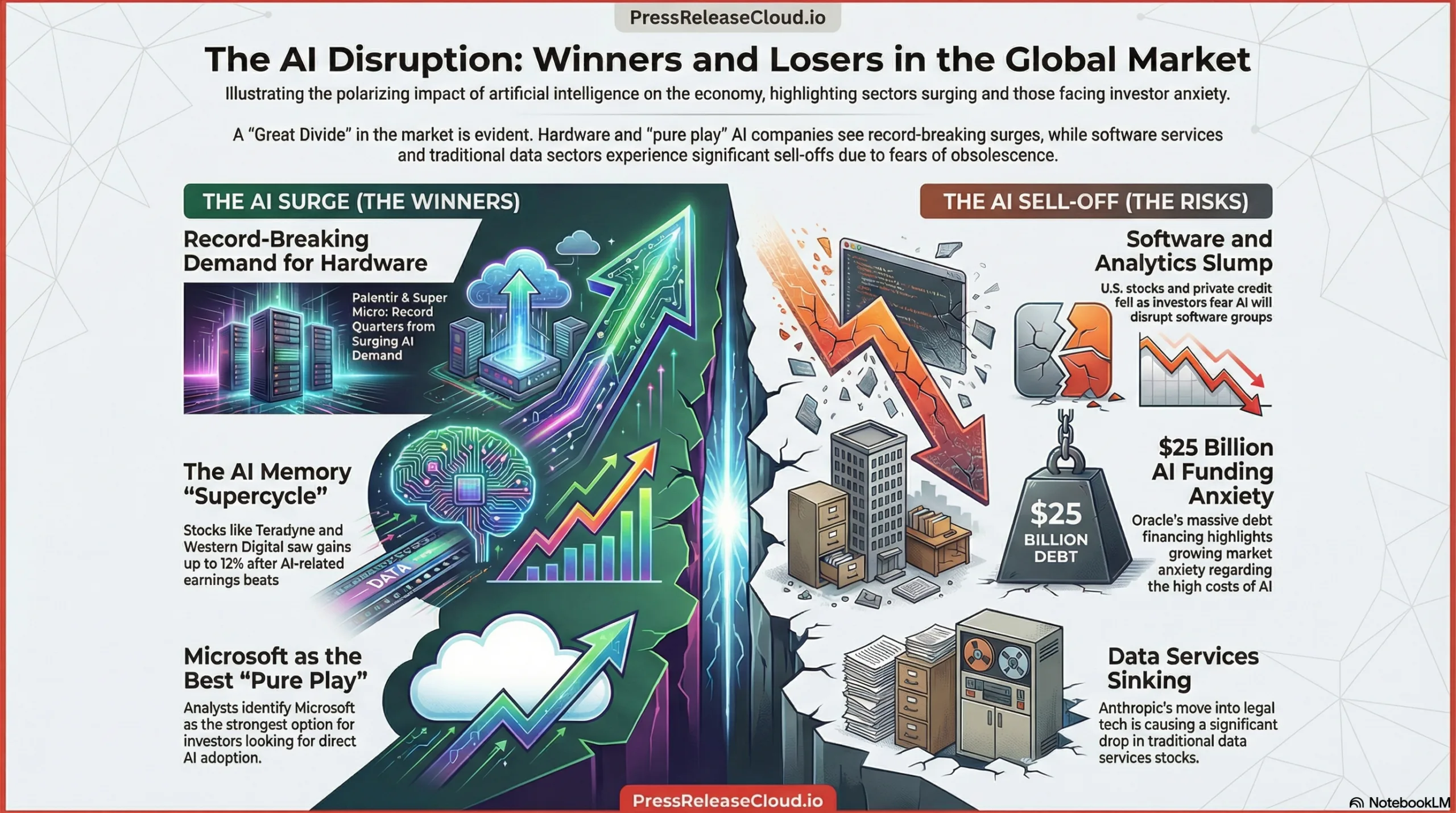
Sector Impact Overview: Architecting the AI Integration Era
1. Introduction: The AI Integration Era
Artificial intelligence has officially transitioned from a niche technological curiosity to a foundational architectural element of modern civilization. We are witnessing the emergence of an “Integration Era,” where machine intelligence is no longer a peripheral tool but a primary participant in global markets, scientific inquiry, and the fabric of personal life. However, this transition is not without friction; the rise of “AI slop” and the tension between synthetic generation and human-centric craftsmanship—often referred to as the “Dead Man’s” dilemma—defines the current growing pains of this systemic shift.
Key Takeaway: For the new learner, the objective is no longer to master a specific software, but to understand a paradigm shift where autonomous agents become the engine for productivity and discovery, redefining the very nature of human-centric sectors.
This systemic integration begins at the most personal level, where AI is fundamentally restructuring the competency requirements for healthcare and wellness management.
——————————————————————————–
2. AI in Healthcare: Personal and Professional Wellness
The current architectural shift in healthcare focuses on the democratization of high-level care and the centralization of family wellness. By leveraging massive datasets, new platforms are transitioning medical oversight from a scarce professional service to an accessible, autonomous utility.
| Project Name | Primary Benefit to the User |
| Lotus Health | A $35M-funded “AI doctor” platform that democratizes care by providing patients with medical consultations for free. |
| Founders of Fitbit’s New Platform | A specialized AI venture (independent of Fitbit) designed to help families monitor and manage collective health data through a unified interface. |
While these advancements prioritize the health of the individual, the “professionalization” of autonomous agents is simultaneously triggering a radical restructuring of the white-collar landscape.
——————————————————————————–
3. Professional Shifts: Legal Tech and Autonomous Development
The professional landscape is undergoing a “trader dump” as the market realizes that traditional manual data services are being superseded by automated intelligence. The competency requirements for professionals are shifting from data retrieval to AI-augmented analysis, causing a significant ripple effect where private credit and software stocks have begun to plummet as investors fear traditional business models are being disrupted.
The 3 Most Disruptive Professional Tools:
- Anthropic’s Legal Tech Integration: By automating high-level legal analysis, Anthropic has moved directly into a space once dominated by manual data service providers. This move has been so disruptive that it is actively sinking data services stocks and causing anxiety in private credit markets.
- Xcode 26.3 AI Agents: This development environment now allows agents from Anthropic and OpenAI to build applications autonomously. This shifts the developer’s role from writing syntax to architecting system logic.
- OpenAI Codex App for Apple: A new standalone application that allows users to leverage the Codex engine on Apple computers, translating natural language into functional code and lowering the technical barrier to software creation.
As AI masters the logic of law and code, it is moving into the subjective realms of entertainment, where it threatens to dismantle the traditional “studio” model entirely.
——————————————————————————–
4. The Creative Frontier: Gaming, Media, and Digital Identity
In the creative sector, we are witnessing a “creative evolution” that challenges the necessity of centralized production. AI is not merely making media faster; it is enabling world-building at a scale that removes the barrier of the traditional studio.
“We don’t use it, we have no interest in it… [AI images and videos] feel kinda ‘off’.” — Suda 51, dismissing AI development tools in favor of traditional craftsmanship, highlighting the philosophical divide between human-centric creators and the rapid industrial adoption of synthetic media.
- The “End of Gaming Studios”: Google’s Genie 3 has emerged as a foundation model for world-building. Its ability to generate interactive environments—exemplified by the “GTA 6 Greenland edition” proof-of-concept—suggests a future where user-generated AAA content replaces large-scale studio productions.
- Synthetic Commercialization: The arrival of the first mainly AI-generated Super Bowl advertisements and AI-generated PlayStation podcasts signals a shift toward fully synthetic brand engagement.
- Digital Identity & Niche Markets: New social platforms like “Moltbook” cater exclusively to AI bots, while dating apps like Grindr are testing premium AI features like “Edge,” which carries a high-tier price point of up to $6,000 annually.
This expansion of the digital frontier is matched by a similar push into the physical universe, where AI is being used to decode the mysteries of space.
——————————————————————————–
5. Scientific Discovery: Space and Cosmic Anomalies
AI has become an essential “time machine” for space exploration, capable of synthesizing decades of historical data to uncover what human observation missed.
Why it Matters The deployment of AI to scan old Hubble Telescope images has resulted in the discovery of hundreds of “cosmic anomalies.” This demonstrates that AI’s value lies not just in future predictions, but in its ability to re-architect our understanding of existing scientific records, extracting new knowledge from the past.
This trajectory is further solidified by the strategic merger of SpaceX and xAI, a move designed to integrate high-speed machine learning directly into the hardware of space exploration. However, this rapid cross-sector expansion creates a “double-edged sword” of economic growth and unprecedented risk.
——————————————————————————–
6. Economic Impact and Emerging Risks
The AI boom is fueling a massive “Memory Supercycle,” but this financial surge is shadowed by a “war with truth” and intensifying geopolitical tensions.
Market Drivers vs. Market Risks
| Market Drivers (The Boom) | Market Risks (The Threat) |
| AI Memory Supercycle: Massive hardware demand fueling a Western Digital $4B buyback and the SoftBank/Intel partnership for next-gen memory. | The War with Truth: The proliferation of deepfakes and “AI slop” creates a landscape where viral AI prompts—as seen with Moltbook—emerge as primary security threats. |
| Record Revenues: Companies like Palantir and Super Micro are reporting record-breaking quarters as enterprise AI demand peaks. | Geopolitical Tensions: The theft of proprietary intelligence (e.g., the ex-Google engineer found guilty of stealing secrets for China) underscores a global race for dominance. |
| The “Pure Play” Strategy: Major analysts view tech giants like Microsoft as the safest vehicles for long-term AI adoption amid market volatility. | Sector Disruption: Sudden “trader dumps” of software and analytics stocks as investors anticipate AI making traditional data roles obsolete. |
——————————————————————————–
7. Conclusion: Navigating the AI-Driven Future
To navigate the AI-driven future, one must view these changes not as a series of news events, but as a total re-architecting of professional and personal life. For those seeking to succeed in this new landscape, three “Success Pillars” are essential:
- Stay Informed on Tool Diversity: Recognize that AI is a diverse ecosystem of agents—from free “AI doctors” to autonomous coding environments—rather than a single software solution.
- Recognize Market Volatility: Understand that while the “Memory Supercycle” creates growth, the disruption of traditional sectors will lead to unpredictable shifts in the job market and financial sectors.
- Prioritize Security and Truth: As synthetic media becomes the norm, the ability to discern “AI slop” from reality and defend against viral AI prompts will be the most critical skill of the modern era.
PressReleaseCloud.io