


Key Takeaways:
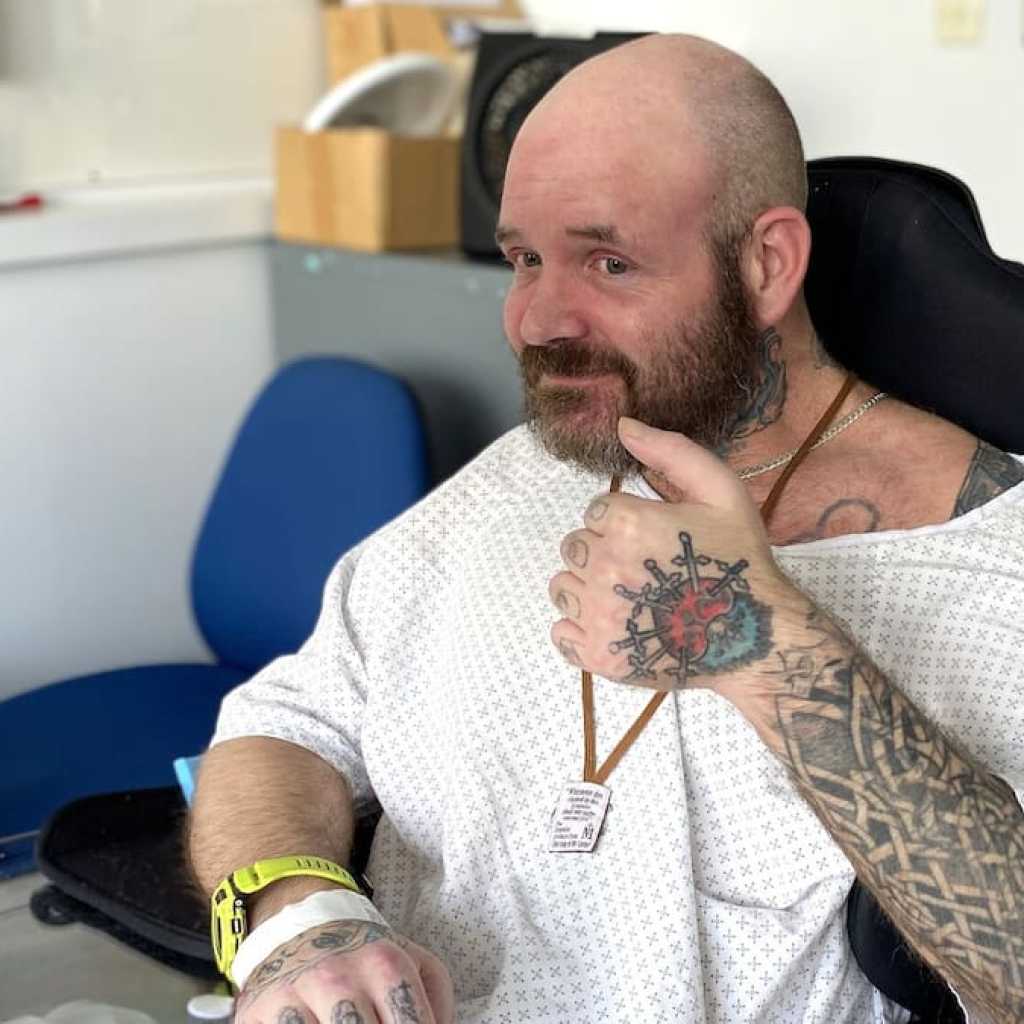
- Ryan Scott, 41, suffered a stroke and was diagnosed with locked-in syndrome, but has made significant progress in his recovery.
- Scott is currently able to move one hand and use a computer to communicate with his eyes, but still requires ongoing care and rehabilitation.
- There is no specialist stroke rehabilitation centre in New Zealand offering the one-on-one care Scott needs, making his future uncertain.
- Funding for Scott’s care is a challenge, and his family has started a Givealittle page to help raise money for his therapy and daily expenses.
- Scott is determined to prove his diagnosis wrong and hopes to one day help others in his situation with a faith-based rehabilitation centre.
Introduction to Ryan Scott’s Story
Ryan Scott, a 41-year-old man from Whangārei, suffered a stroke that left him with locked-in syndrome, a condition where a person is aware and awake but cannot move or speak. Scott was initially only able to move his eyes, and his tears showed that he could hear and understand what was going on around him. His sister, Demelza Scott, was told that her brother was brain dead and that she should rush to Whangārei to say her goodbyes. However, when Demelza arrived at the hospital, she was surprised to see her brother staring back at her, seemingly able to understand what was happening.
Communication and Initial Progress
At the time, Scott could only communicate through a system of looking up to mean "yes" and closing his eyes to mean "no". He was asked if he wanted to survive, and he communicated "yes" each time. This was a significant moment, as it showed that Scott was determined to live and fight for his recovery. As Scott reflects on his Catholic faith, he points upwards, indicating that his faith is a source of motivation and strength for him. He admits that at one point, he thought he would be called to heaven by his maker, but he is grateful to still be alive.
Ongoing Rehabilitation and Challenges
Scott has made impressive progress in his recovery, defying his diagnosis. His intubation was removed, and he began breathing on his own, then started moving his head. He now has full movement of his head, can move one hand, and is able to say a few words. However, his future beyond the walls of Whangārei Hospital is uncertain because there is no specialist stroke rehabilitation centre in New Zealand offering the one-on-one care he needs. This lack of support is a challenge for Scott, who believes that the system would be happier if he chose death instead of life.
Funding and Support
Funding for Scott’s care is another challenge, as his family is concerned that he won’t have enough funding to cover both his day-to-day care and his ongoing therapy. Demelza has started a Givealittle page to help raise money for his speech therapy, physical therapy, occupational therapy, wheelchair and mobility aids, communication aids, medicines, and travel costs. Despite the frustrations, Scott is determined to prove his diagnosis wrong and hopes to one day help others in his situation with a faith-based rehabilitation centre.
Inspiration and Progress
Scott’s progress has been described as a "miracle" by his friends, who say he is an inspiration. Isaak Tuiva, a friend who has been helping Scott with his daily care, says that it was hard seeing his friend go from fit and strong to being unable to move. However, Tuiva says that Scott’s determination to live turned the situation around, and it has been inspiring to watch his friend’s improvements. Scott’s story is a testament to the power of faith, determination, and the importance of support and care in the recovery process.
Conclusion and Future Plans
Ryan Scott’s story is a remarkable one, and his progress is a testament to his strength and determination. Despite the challenges he faces, Scott is determined to prove his diagnosis wrong and hopes to one day help others in his situation. His goal of building a faith-based rehabilitation centre is a noble one, and it is clear that he will stop at nothing to achieve it. As Scott continues on his journey of recovery, it is clear that he will need ongoing support and care, and it is hoped that he will receive the funding and resources he needs to achieve his goals.