


Key Takeaways
- Blue-spotted salamanders can remain active in cold temperatures, even below the normal freezing point of body fluids, a state known as "supercooled."
- These salamanders have been spotted on warm, sunny days, as well as cold, snowy ones, and can be found in Canada and the northern United States.
- Researchers have discovered that blue-spotted salamanders can survive with body temperatures as low as 25 degrees Fahrenheit and still move around.
- This ability to survive in cold temperatures may help the salamanders start breeding early and avoid predators.
- Amphibians, such as the Alaskan wood frog and Siberian salamanders, have been found to be surprisingly adept at dealing with frigid temperatures, with some able to freeze solid for months or survive in extremely cold temperatures.
Introduction to Blue-Spotted Salamanders
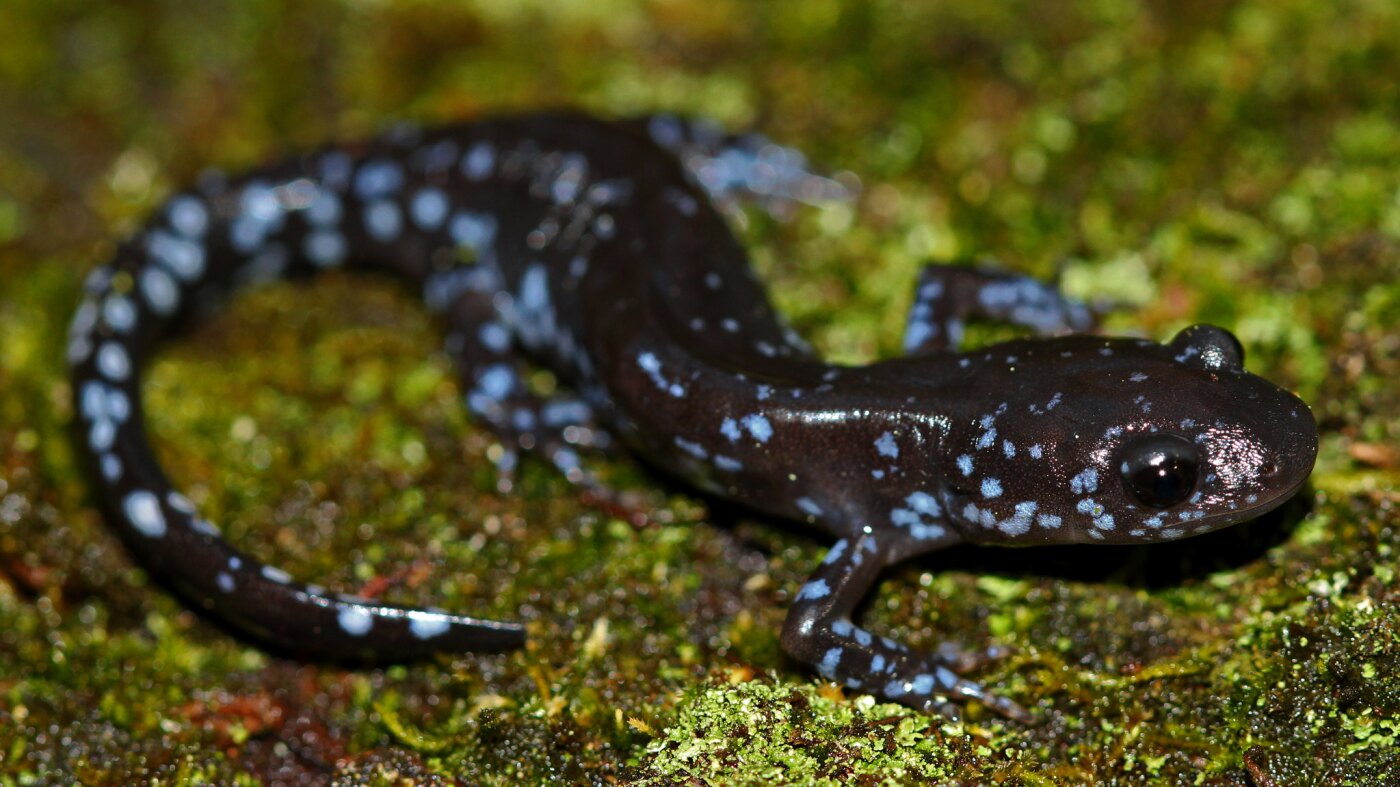
Blue-spotted salamanders are a unique species that can be found in Canada and the northern United States. They are known for their black bodies with shimmery blue spots and can be spotted on warm, sunny days, as well as cold, snowy ones. In ancient times, people believed that these salamanders could survive in fire, but this is not true. However, they do have a surprising ability to deal with cold temperatures, and researchers have recently discovered that they can remain active even when chilled below the normal freezing point of body fluids.
Research on Blue-Spotted Salamanders
Researchers have been studying blue-spotted salamanders at Bat Lake in Canada’s Algonquin Provincial Park. They noticed that these salamanders were active on land, even when there was still ice on the ground and the lake was frozen. This was unexpected, as it was thought that the salamanders would only be active when temperatures had warmed up a bit. The researchers used thermal cameras to measure the body temperature of the salamanders and found that some had body temperatures below freezing, as low as 25 degrees Fahrenheit. Despite this, the salamanders were still able to move around, which suggests that they have some kind of natural anti-freeze that allows them to become supercooled.
Supercooling Ability
The ability of blue-spotted salamanders to become supercooled is a unique adaptation that allows them to survive in cold temperatures. This means that they can remain active and move around, even when their body temperature is below freezing. This is likely an advantage for the salamanders, as it allows them to start breeding early and avoid predators that are still hunkered down. The researchers’ report in the Canadian Journal of Zoology provides evidence of this ability, and other scientists have noted that it is a remarkable example of how amphibians can adapt to extreme temperatures.
Comparison to Other Amphibians
Blue-spotted salamanders are not the only amphibians that can survive in cold temperatures. The Alaskan wood frog, for example, can freeze solid for months, and its heart stops completely. Siberian salamanders have also been found to be able to survive in extremely cold temperatures, as low as negative 40 degrees Celsius or Fahrenheit. These examples demonstrate that amphibians are surprisingly adept at dealing with frigid temperatures, and scientists are still learning about the unique adaptations that allow them to survive in these conditions.
Conclusion and Future Research
The discovery of blue-spotted salamanders’ ability to become supercooled is an important finding that highlights the unique adaptations of amphibians. Further research is needed to understand how these salamanders are able to survive in cold temperatures and how this ability helps them in their environment. Scientists also need to learn more about how other cold-blooded animals, such as ectotherms, overwinter and survive in extreme temperatures. By studying these adaptations, researchers can gain a better understanding of the complex relationships between animals and their environments, and how they are able to thrive in a wide range of conditions.