


Key Takeaways
- Morgan Stanley predicts Apple’s entry into humanoid robotics could generate over $133 billion annually by 2040.
- Advancements in AI and computing are making humanoid robots a more commercially viable concept.
- Several companies, including Foxconn, Nvidia, Amazon, and Tesla, are already developing and deploying various forms of robotics.
- Apple’s existing technology and vast resources position it well to compete in the humanoid robotics market.
- Challenges remain in perfecting robot functionality and lowering prices to make them accessible to consumers.
Summary
Apple’s future might extend beyond the iPhone, with Morgan Stanley suggesting a significant shift towards humanoid robotics. The investment bank projects that Apple’s foray into this field could generate upward of $133 billion per year. This projection stems from the increasing viability of humanoid robots as a commercial product, thanks to advancements in generative AI and compact, powerful computers. Morgan Stanley estimates that Apple could conservatively reach $130 billion by 2040, assuming a 9% market share 15 years from now.
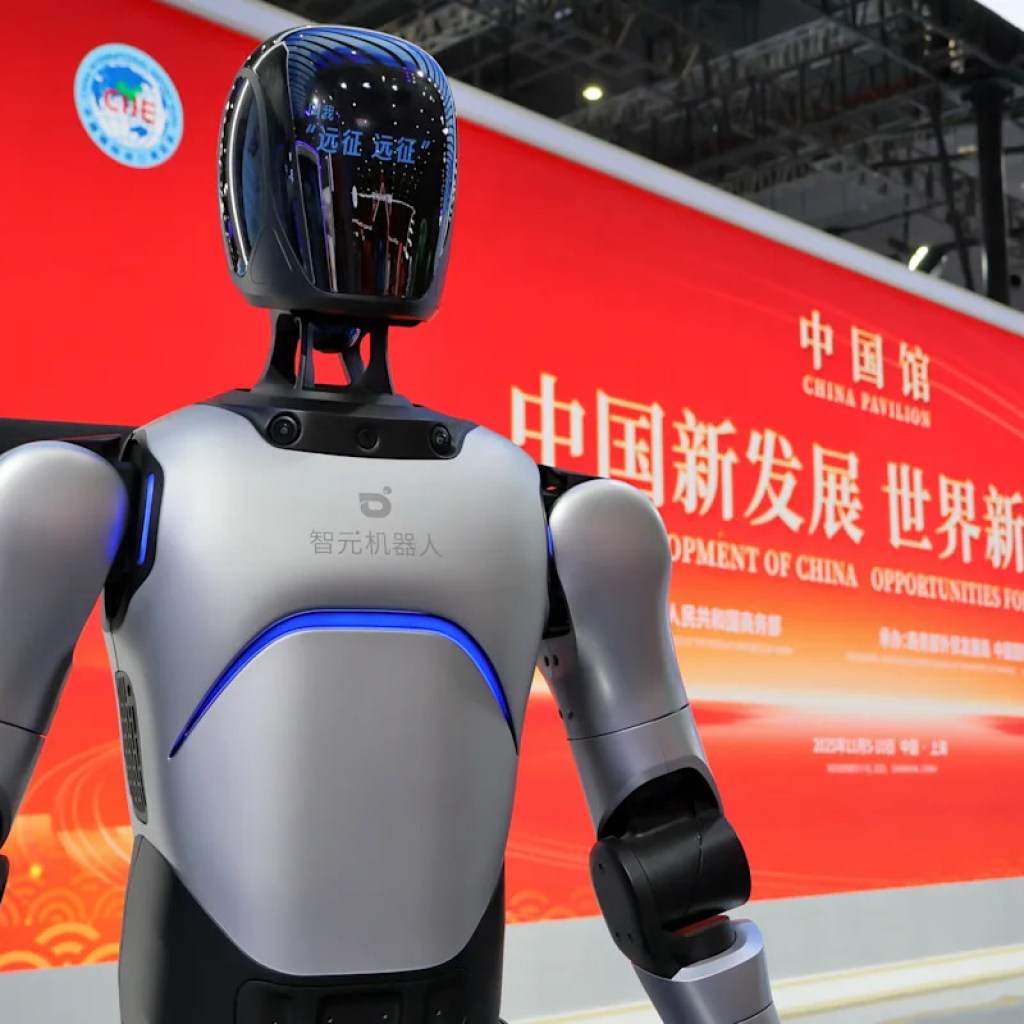
The concept of humanoid robots, once relegated to science fiction, is now gaining traction in the tech industry. Manufacturers and logistics hubs already use robotic arms and specialized robots for moving goods. Companies like Foxconn are planning to deploy humanoid robots at their Nvidia AI server plant, leveraging Nvidia’s robotics technologies. Nvidia CEO Jensen Huang sees humanoid robotics as a multitrillion-dollar opportunity and promotes the company’s Isaac Gr00t platform for developing and training these robots.
Amazon has also been exploring robotics extensively. It recently deployed its 1 millionth robot, resembling a Roomba, in a fulfillment center in Japan. The company is also testing Agility Robotics’ Digit robots and exploring the use of robots for package delivery. Their Astro home robot, though currently available through invitation only and priced at $1,599, serves as an in-home sentry. Elon Musk’s Tesla is also developing its Optimus line of humanoid robots, with Musk predicting that 80% of Tesla’s value will be tied to this venture.
Apple has been quietly developing the necessary technology for robotics, building upon its work in the now-defunct self-driving car project. According to Mark Gurman from Bloomberg, Apple is developing a tabletop robotic arm with an iPad-like display that turns towards the user. Morgan Stanley analysts predict significant adoption of humanoid robots in US households, estimating 415,000 annual and 1.6 million cumulative units by 2040, representing a 1.65% household penetration rate. The analysts also project an average selling price of around $30,000 per robot, which is expected to decline over time.
Apple possesses several advantages that could make it a major player in the robotics space. These include substantial cash reserves and a massive installed base of 2.3 billion devices. However, challenges remain in getting these robots into homes. Key technological hurdles include perfecting computer vision to navigate environments safely and ensuring robots can handle delicate tasks like picking up glassware. Current robots, while capable of basic tasks, are often slow, limiting their usefulness for time-sensitive chores.
The price point also remains a significant barrier. Consumers are unlikely to spend the equivalent of a small used car on a robot. For humanoid robots to achieve widespread adoption, prices need to become far more accessible. Until then, consumers will have to rely on their own efforts for tasks like unloading the dishwasher.